
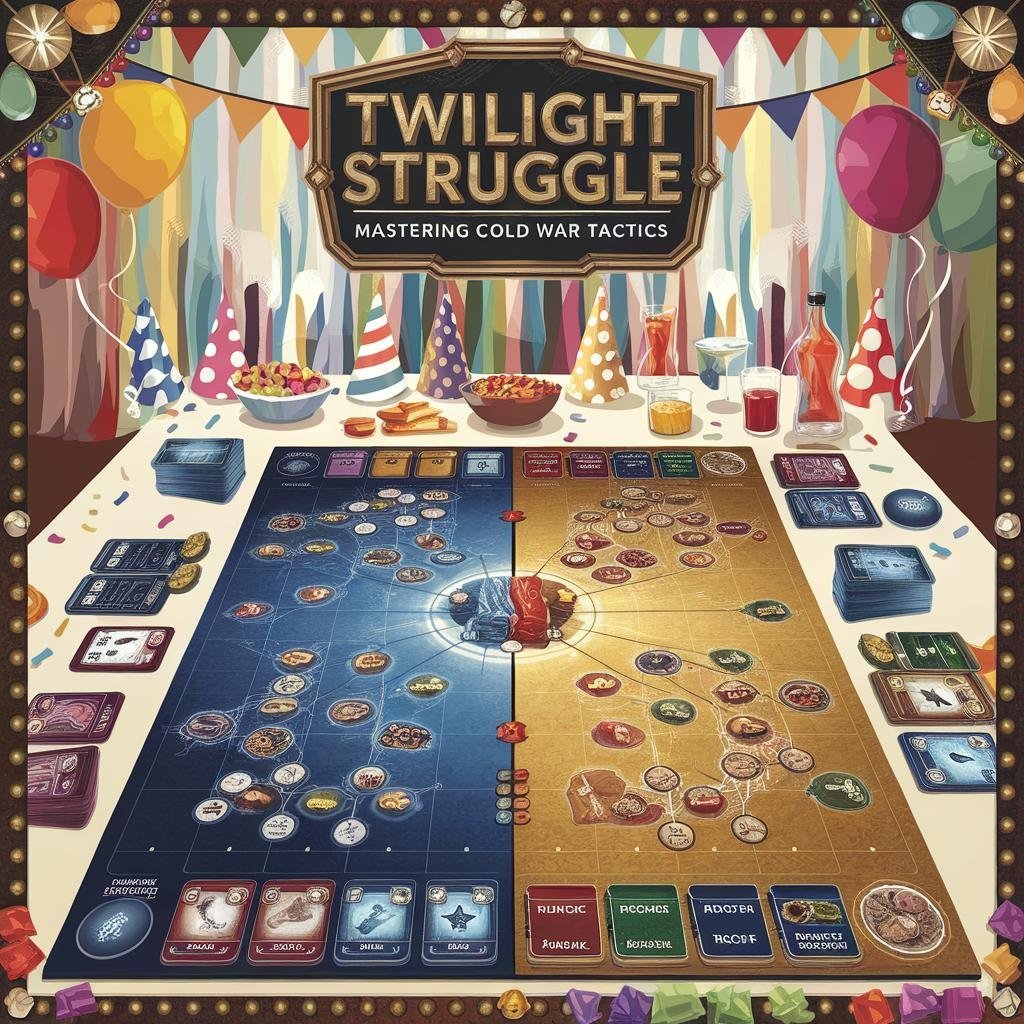
Twilight Struggle stands as one of the most acclaimed strategy board games ever created, immersing players in the tense geopolitical chess match between the United States and Soviet Union during the Cold War era. This two-player masterpiece challenges you to navigate nearly five decades of historical events, proxy wars, and nuclear brinkmanship while competing for global influence.
The game’s complexity and historical depth can feel overwhelming at first, but understanding its core mechanics and strategic principles will transform you from a confused newcomer into a Cold War commander. Success requires balancing immediate tactical gains with long-term strategic positioning across multiple theaters of conflict.
TL;DR
- Control DEFCON levels carefully – reaching DEFCON 1 means instant defeat for whoever triggered it.
- Focus on scoring regions where you have clear advantages rather than spreading influence too thin across all areas.
- The Space Race provides 20 victory points and prevents your opponent from using powerful events against you.
- Holding the China Card gives you 4 operations points every other turn – fight hard to maintain control of it.
Twilight Struggle Mastering Cold War Tactics
The heart of Twilight Struggle lies in managing your hand of cards effectively while positioning influence markers across six key regions of the world. Each card serves a dual purpose – you can either play it for operations points to place influence or trigger its historical event. The tension comes from the fact that many cards contain events that benefit your opponent, forcing difficult decisions about when and how to play them.
Victory conditions provide multiple paths to success, keeping both players engaged throughout the game. You can win immediately by controlling Europe while holding the China Card, achieving 20 victory points, or surviving until the end of Turn 10 with more victory points than your opponent.
Understanding the Phases of Play
Twilight Struggle unfolds across three distinct eras, each presenting unique challenges and opportunities. Early War focuses on establishing your initial spheres of influence in Europe and Asia, while Mid War introduces volatile regions like Africa and South America where influence battles rage.
Late War cards pack the most punch, featuring powerful events that can swing the game dramatically in either direction. Planning your strategy around these phases helps you anticipate when certain regions become more or less important.
Early War Priorities
- Europe First – Secure key European countries early since they’re worth the most points and can trigger automatic victory.
- China Card Control – Fight for China immediately as controlling this card provides significant operational advantages.
- Space Race Investment – Use opponent events for the Space Race to deny them beneficial effects while gaining victory points.
- DEFCON Management – Avoid triggering military operations that push DEFCON to dangerous levels.
Regional Control Strategies
Each region scores differently based on the countries you control and dominate, making some areas more valuable than others at different points in the game. Europe typically offers the highest point potential but also faces the most intense competition from both superpowers.
Understanding when regions score helps you time your influence placement for maximum impact. Rather than spreading influence everywhere, focus your efforts on 2-3 regions where you can achieve clear dominance before scoring occurs.
Regional Scoring Priorities
- Secure Your Strongholds. Establish unbreakable control in regions that favor your superpower’s natural advantages.
- Contest Key Battlegrounds. Fight hard for battleground countries that provide multiple victory points and prevent opponent domination.
- Deny Opponent Dominance. Place just enough influence in enemy regions to prevent them from achieving full control bonuses.
- Time Your Pushes. Coordinate major influence campaigns with upcoming scoring cards for maximum point gains.
Card Timing is Everything
Hold onto scoring cards until you’ve positioned yourself advantageously in that region. Playing a scoring card when your opponent dominates the region hands them easy victory points.
The Space Race Advantage
The Space Race offers more than just victory points – it provides a crucial outlet for playing opponent events without triggering their effects. Advancing on the Space Race track requires discarding cards during the headline phase, making it a resource management decision that impacts your entire turn.
Successful Space Race advancement also unlocks powerful ongoing benefits like additional influence placement and card draws. Prioritize Space Race advancement when you’re holding dangerous opponent events or when you need the specific benefits that certain space achievements provide.
Space Race Benefits
- Animal in Space – Gain 1 victory point for reaching this milestone first.
- Man in Space – Earn 2 victory points plus the ability to discard a card during any action round.
- Man on the Moon – Score 3 victory points and gain the powerful “One Small Step” capability.
- Space Station – Add 2 victory points while forcing your opponent to discard their highest operations card.
Military Operations and DEFCON
Military operations provide direct ways to remove opponent influence or stage coups in contested regions, but they come with the dangerous side effect of lowering the DEFCON track. Managing this delicate balance requires careful planning and risk assessment throughout the game.
Remember that triggering DEFCON 1 results in immediate defeat for whoever caused it, making nuclear war a real threat that shapes every military decision. Use military operations strategically rather than carelessly, always considering the broader implications for global stability.
Advanced Tactical Concepts
Mastering Twilight Struggle requires understanding several advanced concepts that separate good players from great ones. Card counting becomes essential in later turns as you track which powerful events remain in the deck and plan accordingly.
The concept of “required” versus “optional” events dramatically impacts how you sequence your plays each turn. Understanding these distinctions allows you to manipulate turn order and force your opponent into difficult positions where they must choose between bad and worse options.
Key Advanced Techniques
- Event Chaining – Sequence events to create cascading effects that multiply your advantages across multiple regions.
- Influence Efficiency – Calculate the most cost-effective ways to achieve regional control before committing resources.
- Turn Order Manipulation – Use event timing to control who plays first in crucial action rounds.
- Deck Management – Track discarded cards to predict when dangerous events might resurface.
Just like mastering strategy board games requires understanding multiple layers of complexity, Twilight Struggle rewards players who think several moves ahead while adapting to changing circumstances. The game’s historical theme adds weight to every decision, making each victory feel like you’ve successfully navigated one of history’s most dangerous periods.
Frequently Asked Questions
How long does a typical game of Twilight Struggle take?
Most games last 2-3 hours, though experienced players can finish in 90 minutes while newcomers might need 4 hours for their first game.
Can Twilight Struggle be played with more than two players?
No, Twilight Struggle is designed exclusively for two players representing the USA and USSR during the Cold War.
What happens if both players reach 20 victory points simultaneously?
The game ends immediately when any player reaches 20 victory points, with that player winning regardless of their opponent’s score.
Is there a digital version available for online play?
Yes, Twilight Struggle is available on Steam and mobile platforms, offering both single-player AI and online multiplayer modes.
How important is historical knowledge for playing effectively?
While historical knowledge enhances the thematic experience, the game mechanics are self-contained and don’t require extensive Cold War expertise to play well.
Final Thoughts
Twilight Struggle Mastering Cold War Tactics requires patience, strategic thinking, and the ability to adapt your plans as the global situation evolves. The game rewards players who balance aggressive expansion with careful risk management, creating some of the most tense and memorable gaming experiences available.
Start with basic influence placement strategies and gradually incorporate advanced techniques like event chaining and deck management as you gain experience with the game’s rhythm and flow.
—
##
class=”aligncenter size-large wp-image-1028″ title=”learning the game of Twilight Struggle”

As the founder of Friends Game Night, Ryan channels his enthusiasm for gaming into a platform that celebrates the magic of gathering friends around the digital or physical tabletop. Through his website, Ryan shares insightful articles, reviews, and recommendations, aiming to inspire others to create their own memorable gaming moments.
Subscribe to Our Newsletter