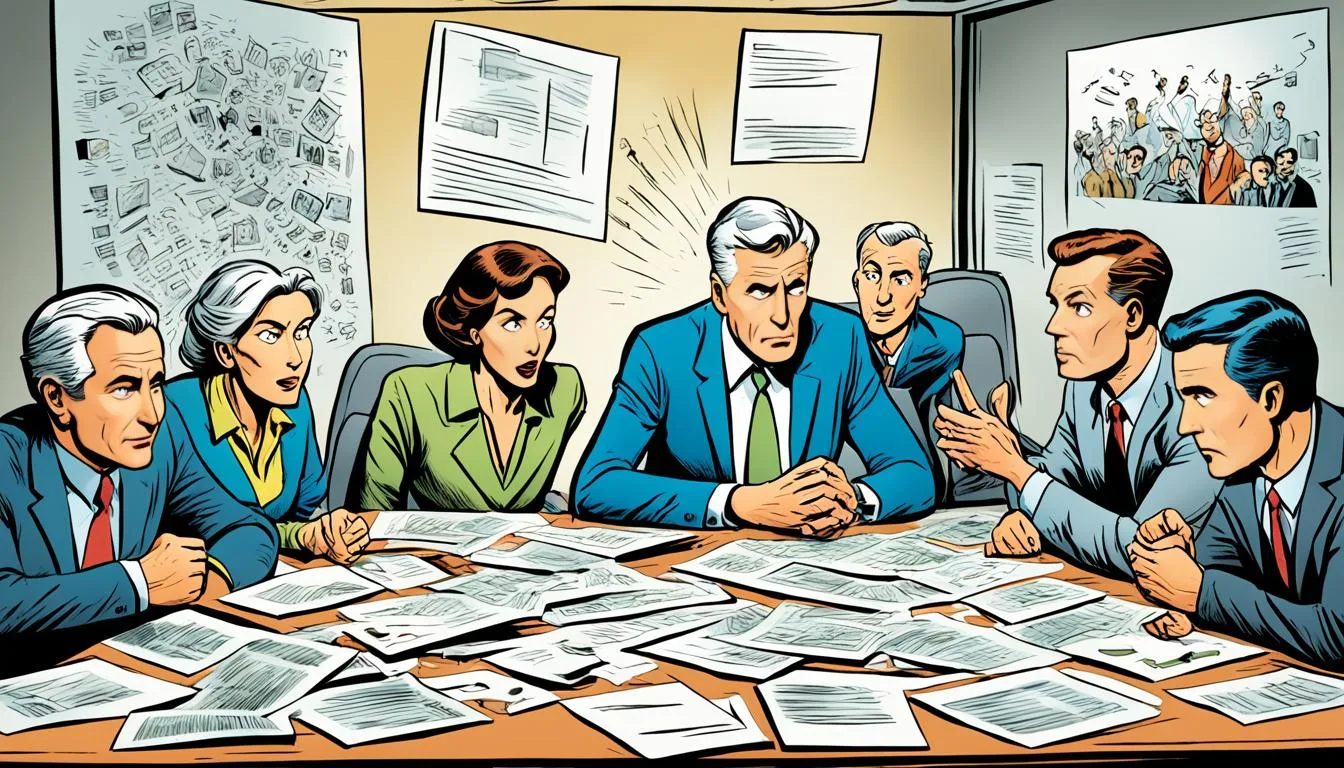
The Resistance brings espionage thrills to your living room, pitting a secret resistance movement against government spies in an intense battle of wits and deception. Players must complete missions while hidden spies work to sabotage their efforts, creating nail-biting moments of suspicion and betrayal.
This social deduction masterpiece transforms any group into a web of paranoia and accusations. Every vote matters, every glance is suspicious, and trust becomes your most valuable – and dangerous – commodity.
TL;DR
- 5-10 players split into resistance members and spies, with spies knowing each other’s identities.
- Resistance wins by completing 3 out of 5 missions successfully without spy sabotage.
- Games typically last 30-45 minutes with intense discussion and voting phases.
- No player elimination means everyone stays engaged from start to finish.
The Resistance Game Overview
The Resistance drops players into a dystopian world where a small group of resistance fighters attempts to overthrow an oppressive government. Hidden among them are government spies who know each other’s identities and work together to ensure missions fail.
The game’s brilliance lies in its asymmetrical information – spies start with a huge advantage by knowing who their allies are, while resistance members must rely on observation, logic, and gut instincts. This creates natural tension that builds throughout each round.
Essential Game Components
The Resistance keeps things simple with minimal components that focus attention on player interaction. The base game includes character cards, mission cards, vote tokens, and score markers.
Each player receives a character card that secretly assigns them to either the resistance or spy team. Mission cards determine the number of people needed for each operation, while vote tokens allow players to approve or reject proposed mission teams.
Player Roles and Team Composition
Team sizes vary based on player count, maintaining careful balance between resistance members and spies:
- 5 players – 3 resistance, 2 spies
- 6 players – 4 resistance, 2 spies
- 7 players – 4 resistance, 3 spies
- 8 players – 5 resistance, 3 spies
- 9 players – 6 resistance, 3 spies
- 10 players – 6 resistance, 4 spies
Mission Structure and Victory Conditions
Five missions determine the game’s outcome, with each requiring a specific number of team members. The resistance wins by successfully completing three missions, while spies win by sabotaging three missions.
Mission team sizes increase as the game progresses, creating more opportunities for spies to infiltrate teams while giving resistance members more chances to identify suspicious behavior. The fourth mission requires two failure cards in games with seven or more players, adding an extra layer of difficulty.
The Mission Process
Each mission follows a structured sequence that builds tension through democratic decision-making:
- Team Selection. The current leader proposes a team for the mission, choosing from all players including themselves.
- Discussion Phase. Players debate the proposed team composition, share suspicions, and build cases for or against approval.
- Voting. All players simultaneously reveal approve or reject tokens – the team needs majority approval to proceed.
- Mission Execution. Selected team members secretly choose success or fail cards, with spies having the option to sabotage.
- Results. Cards are shuffled and revealed, showing whether the mission succeeded or failed based on fail cards present.
Strategic Considerations for Both Teams
Success in The Resistance requires different approaches depending on your secret allegiance. Resistance members must identify spies through careful observation and logical deduction, while spies need to blend in convincingly while creating opportunities to sabotage.
The most challenging aspect involves reading player behavior and voting patterns. Spies often face difficult decisions about when to fail missions – failing too early draws suspicion, while waiting too long might mean missing critical opportunities.
Master the Poker Face
Regardless of your role, maintaining consistent behavior throughout the game is crucial. Sudden changes in demeanor or voting patterns often reveal hidden loyalties to observant players.
Resistance Team Tactics
Resistance members start at a significant information disadvantage but can leverage their majority numbers and mission success requirement. Key strategies include:
- Pattern Analysis – Track voting patterns and mission participation to identify suspicious correlations
- Process of Elimination – Use failed missions to narrow down potential spy candidates
- Trust Building – Establish reliable partnerships with confirmed resistance members
- Information Sharing – Coordinate observations and suspicions to build consensus
Spy Team Strategies
Spies must balance appearing helpful while creating sabotage opportunities. Their coordination advantage comes with the challenge of avoiding detection:
- Selective Sabotage – Choose which missions to fail based on suspicion levels and team composition
- Misdirection – Point suspicion toward resistance members to create confusion
- Vote Coordination – Use secret knowledge to support each other’s proposals subtly
- Timing Management – Balance when to blend in versus when to push for spy-friendly teams
Popular Variants and Expansions
The Resistance offers several official variants that add complexity and replay value. The Hidden Agenda expansion introduces plot cards that provide special abilities and information, while character roles add unique powers to specific players.
Many groups create house rules to address common situations or adjust difficulty levels. Popular modifications include allowing players to pass leadership voluntarily or requiring unanimous votes for certain critical decisions.
The Resistance: Avalon
This medieval-themed variant adds special character roles like Merlin and Assassin, creating additional layers of deduction and strategy. Avalon: The Quest for Loyalty and Deception maintains the core mechanics while introducing new win conditions and role-based abilities.
Hosting Tips for Maximum Enjoyment
Creating the right atmosphere makes The Resistance sessions memorable for all participants. Encourage discussion and debate while maintaining a respectful environment where everyone feels comfortable participating.
Consider your group’s personality when introducing the game – some players love intense psychological gameplay, while others prefer lighter social interaction. Start with the basic rules before adding variants or special roles.
Managing Group Dynamics
Large groups can become chaotic without proper moderation. Establish clear discussion phases and ensure quieter players get opportunities to share their thoughts. Time limits on debates keep the game moving while preventing analysis paralysis.
Watch for players who might take accusations too personally – remind everyone that deception and suspicion are core game mechanics, not personal attacks. The best Resistance games happen when players separate in-game betrayal from real-world relationships.
Frequently Asked Questions
Can resistance members choose to fail missions?
No, resistance members must always play success cards. Only spies have access to fail cards and can choose whether to sabotage missions.
What happens if a team proposal is rejected five times?
If five consecutive team proposals are rejected during any mission, the spies automatically win. This prevents games from stalling indefinitely.
Do spies have to fail missions when they’re on the team?
No, spies can choose to play success cards to avoid suspicion. This optional sabotage creates interesting strategic decisions about when to reveal their true nature.
How long does a typical game last?
Most games run 30-45 minutes depending on group size and discussion length. Experienced players tend to move faster while newcomers may need more time to analyze information.
Is The Resistance suitable for younger players?
The game works well for ages 13 and up who can handle deception mechanics. Younger children might struggle with the psychological aspects and complex social dynamics involved.
Final Thoughts
The Resistance delivers unmatched tension and social interaction that keeps players coming back for repeated sessions. Its combination of simple rules and complex psychology creates memorable moments of triumph and betrayal that become legendary group stories.
Whether you’re building trust or sowing discord, every game offers fresh challenges and surprises. Start with a trusted group this weekend and discover why deduction games like this remain party game favorites year after year.

As the founder of Friends Game Night, Ryan channels his enthusiasm for gaming into a platform that celebrates the magic of gathering friends around the digital or physical tabletop. Through his website, Ryan shares insightful articles, reviews, and recommendations, aiming to inspire others to create their own memorable gaming moments.
Subscribe to Our Newsletter