
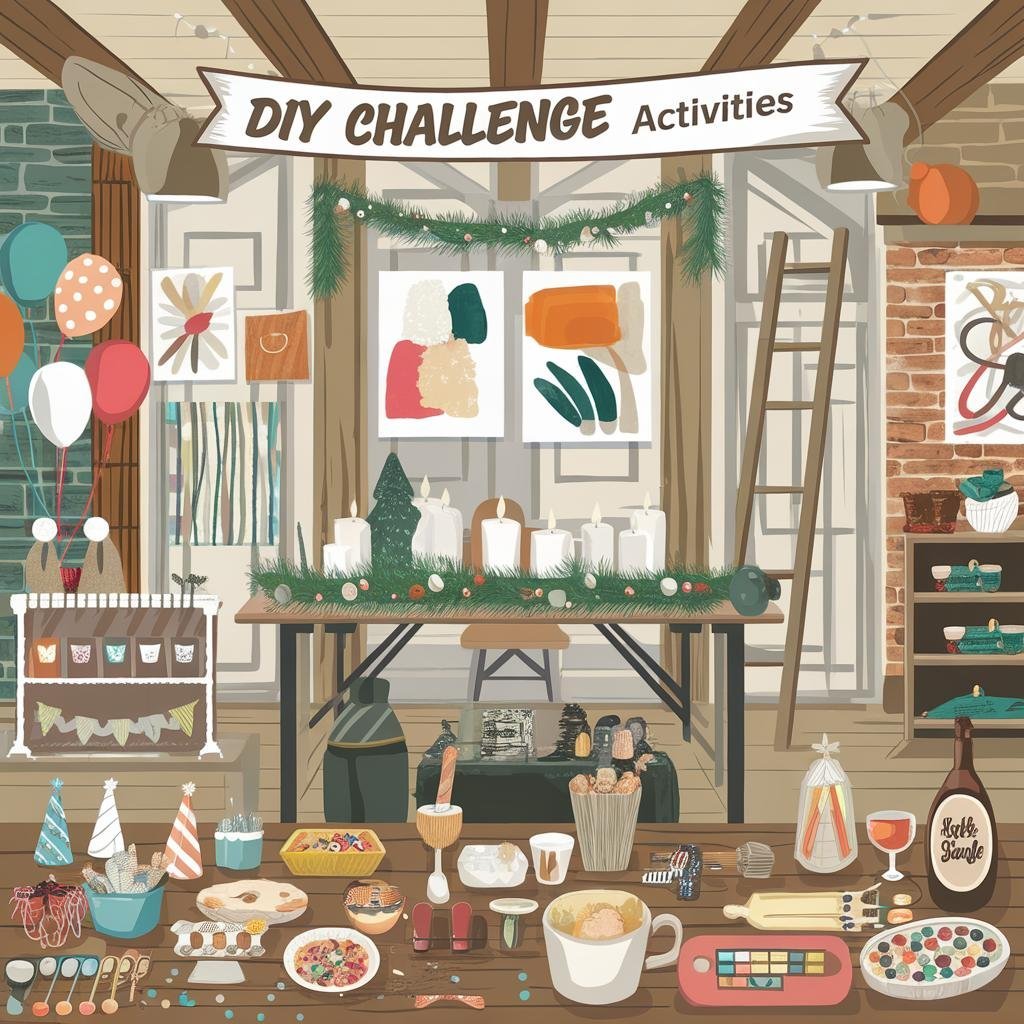
TL;DR
- Set a 30-45 minute time limit for most DIY challenges to maintain energy and excitement.
- Prepare 3-4 basic material stations with items like construction paper, tape, markers, and scissors.
- Create voting categories like “Most Creative,” “Funniest,” and “Most Practical” so everyone can win something.
- Have a cleanup station ready with trash bags and wet wipes to make post-challenge tidying quick and easy.
DIY Challenges for Creative Competition
First Posted March 26, 2026 | 🕒 Last Updated on March 27, 2026 by Ryan ConlonThe beauty of DIY challenges lies in their flexibility and accessibility. You don’t need expensive supplies or advanced crafting skills to create engaging activities that bring people together through creativity.
Most challenges work best with 4-8 participants, though you can easily adapt them for larger groups by creating teams. The key is balancing creative freedom with clear guidelines that keep everyone on track.
Paper Engineering Challenges
Paper-based challenges offer endless possibilities with minimal investment. These activities test spatial thinking and creative problem-solving while keeping costs low.
- Tower Building Contest – Use only newspaper and tape to build the tallest freestanding structure in 20 minutes.
- Paper Airplane Olympics – Design planes for distance, accuracy, and trick flying with different scoring rounds.
- Origami Speed Challenge – Follow the same origami folding instructions to see who creates the best paper crane or flower fastest.
- Paper Fashion Show – Create wearable accessories or costumes using only newspaper, magazines, and tape.
Upcycling and Repurposing Challenges
These challenges turn household items into useful or decorative objects. They’re especially satisfying because participants create something they might actually use afterward.
- Cardboard Furniture – Transform shipping boxes into functional items like phone stands, organizers, or small stools.
- Bottle and Jar Makeovers – Turn glass containers into planters, pencil holders, or decorative pieces using paint and ribbon.
- T-Shirt Transformations – Cut and tie old shirts into bags, pillowcases, or cleaning rags without sewing.
- Tin Can Creations – Convert empty cans into planters, desk organizers, or musical instruments.
Setting Up Your Creative Workspace
A well-organized setup makes the difference between smooth creative flow and chaotic scrambling for supplies. Prepare your space before guests arrive so you can focus on facilitating fun rather than hunting for scissors.
Cover tables with newspaper or plastic tablecloths to protect surfaces and make cleanup easier. Having designated spots for different materials helps participants find what they need quickly during timed challenges.
Essential Supply Stations
Create separate stations for different types of materials to avoid crowding and confusion. This organization also helps you see when supplies are running low during activities.
- Cutting Station. Include several pairs of scissors, craft knives with cutting mats, and rulers for measuring.
- Adhesive Station. Stock tape, glue sticks, hot glue guns with extra sticks, and double-sided tape.
- Decoration Station. Provide markers, colored pencils, paint pens, stickers, and ribbon.
- Materials Station. Organize paper, cardboard, fabric scraps, and any specific items for planned challenges.
Pro Tip for Material Prep
Collect materials over several weeks before your event rather than buying everything new. Ask friends to save interesting containers, fabric scraps, and packaging materials for more variety and lower costs.
Team-Based Creative Challenges
Team challenges work well when you have 6 or more people, as they encourage collaboration and let different skills shine within each group. Mix artistic and practical thinkers on each team for the best results.
These activities often produce more ambitious projects than individual challenges because team members can divide tasks and build on each other’s ideas. Just like cooperative challenges for team players, they strengthen relationships through shared problem-solving.
Group Project Ideas
Team challenges should have clear end goals while leaving room for creative interpretation. This balance keeps groups focused while allowing their unique personalities to emerge in their creations.
- Theme Room Design – Teams get identical cardboard boxes to decorate as rooms with specific themes like “underwater” or “space station.”
- Rube Goldberg Machines – Build chain reaction devices using household items to accomplish simple tasks like ringing a bell.
- Stop-Motion Stories – Create short videos using smartphone cameras and handmade props or characters.
- Community Art Projects – Each team contributes one section to a larger mural or sculpture that combines at the end.
Quick and Easy 15-Minute Challenges
Short challenges work perfectly as warm-ups, tie-breakers, or when you want to try multiple activities in one evening. They keep energy high and give everyone quick wins to build confidence.
These rapid-fire activities also work well between other games, similar to how minute to win it game night challenges can energize a crowd. The time pressure adds excitement without becoming stressful.
- Speed Sketching – Draw recognizable objects using only geometric shapes in under 5 minutes.
- One-Color Challenges – Create something beautiful using materials of only one color.
- Blind Contour Drawing – Draw a portrait of another player without looking at your paper.
- Texture Rubbings – Use paper and crayons to capture interesting textures from around your space.
Judging and Celebrating Creativity
The judging process should celebrate different types of success rather than declaring one clear winner. This approach keeps the focus on fun and encourages participants to take creative risks.
Create multiple award categories so everyone has a chance to be recognized for something unique about their creation. This strategy works especially well for groups with mixed skill levels and ages.
Award Categories That Encourage Participation
Varied award categories help participants feel successful regardless of their crafting experience or artistic background. Focus on effort, creativity, and unique approaches rather than technical perfection.
- Most Creative Use of Materials – Recognizes innovative problem-solving and thinking outside the box.
- Funniest Creation – Celebrates humor and personality in the finished pieces.
- Most Likely to Actually Use – Honors practical and functional designs.
- Best Story Behind the Project – Lets creators explain their inspiration and creative process.
- Most Improved from Start to Finish – Encourages persistence and celebrates growth during the activity.
Adapting Challenges for Different Groups
Successful DIY challenges match the interests and abilities of your specific group. Consider factors like age ranges, artistic experience, and available time when planning activities.
Mixed-age groups often benefit from challenges that let different generations share skills and perspectives. Older participants might offer practical construction knowledge while younger ones bring fresh design ideas.
Modifications for Different Skill Levels
Simple adjustments can make the same basic challenge work for beginners and experienced crafters alike. Offer optional complexity rather than requiring everyone to tackle the same difficulty level.
- Provide Templates. Offer pre-drawn patterns for those who want them while letting others start from scratch.
- Suggest Skill Levels. Present each challenge with “easy,” “medium,” and “advanced” approaches.
- Pair Experienced with New. Team up crafty participants with beginners for collaborative learning.
- Offer Material Choices. Let people choose simpler or more complex materials based on their comfort level.
Frequently Asked Questions
How much should I budget for DIY challenge supplies?
Plan for $3-5 per person for a full evening of activities, though you can spend much less by using recycled materials and household items.
What’s the ideal group size for DIY challenges?
Groups of 4-8 people work best for individual challenges, while 6-12 participants are perfect for team-based activities.
How do I handle participants with different artistic abilities?
Focus on creativity and effort rather than technical skill, and create multiple award categories so everyone can succeed at something.
Can DIY challenges work for virtual game nights?
Yes, send supply lists in advance or focus on challenges using common household items that everyone likely has available.
How long should each DIY challenge last?
Most challenges work best with 20-45 minute time limits, though simple warm-up activities can be as short as 5-10 minutes.
Final Thoughts
DIY Challenges offer a refreshing alternative to traditional game night activities while bringing out everyone’s creative potential. They create lasting memories through the satisfaction of making something with your hands and the joy of friendly competition.
Start with simple paper-based challenges this week and gradually build your supply collection for more ambitious projects. The key is keeping the focus on fun and creativity rather than perfection.

As the founder of Friends Game Night, Ryan channels his enthusiasm for gaming into a platform that celebrates the magic of gathering friends around the digital or physical tabletop. Through his website, Ryan shares insightful articles, reviews, and recommendations, aiming to inspire others to create their own memorable gaming moments.
Subscribe to Our Newsletter


