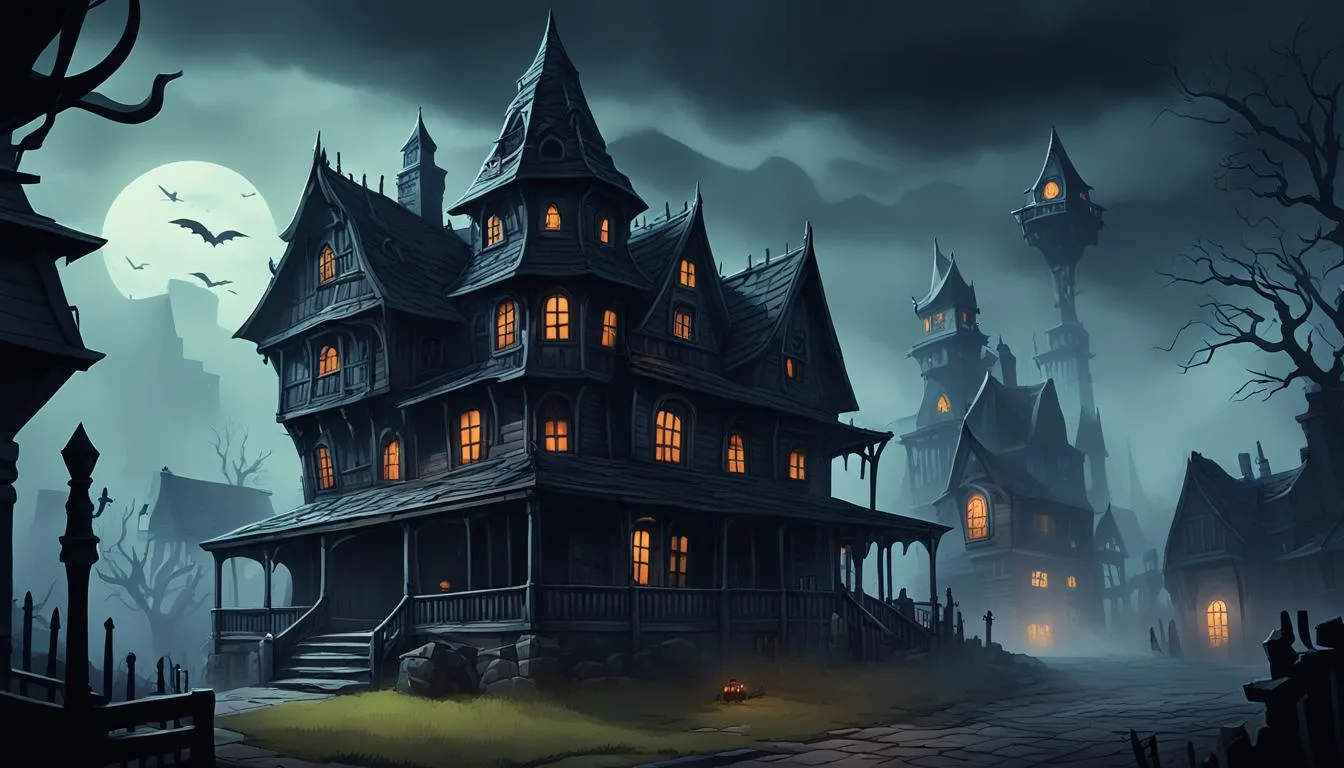
Betrayal At Baldur’s Gate brings the horror and mystery of the beloved Betrayal at House on the Hill into the iconic Dungeons & Dragons setting. This semi-cooperative board game combines exploration, storytelling, and unexpected betrayals that will keep your gaming group on edge throughout each session.
Players work together initially to explore the shadowy streets and underground locations of Baldur’s Gate, but the game’s signature twist means one player will eventually turn traitor. With 50 different scenarios and countless replay possibilities, every game tells a completely different horror story.
TL;DR
- Features 50 unique betrayal scenarios with different traitors, monsters, and winning conditions each game.
- Supports 3-6 players with games typically lasting 60-90 minutes per session.
- Includes 42 room tiles that create a different Baldur’s Gate layout every playthrough.
- Uses 8 different character types, each with unique starting stats and special abilities.
Betrayal At Baldur’s Gate Game Overview
The game begins with all players working as a team to explore the dangerous city of Baldur’s Gate. You’ll move through taverns, sewers, streets, and crypts while encountering events, finding items, and discovering omens that build toward the inevitable betrayal moment.
Each character has four traits – might, speed, knowledge, and sanity – that determine their effectiveness in different situations. As you explore, these stats will fluctuate based on the events you encounter, making resource management a key strategic element.
The Haunt Phase
Once someone discovers enough omens, the haunt begins and the cooperative phase ends. One player becomes the traitor based on which character discovered the triggering omen and which room they were in when it happened.
The traitor receives a different set of rules and objectives from the remaining heroes. This creates an asymmetrical gameplay experience where both sides have different paths to victory, often involving summoning monsters, performing rituals, or surviving until dawn.
Character Selection and Abilities
The game includes eight iconic D&D character types, each with distinct starting statistics and special abilities. Your choice affects both your exploration capabilities and your effectiveness during the haunt phase.
- Aerdrie Faenya (Elf Ranger) – High speed and knowledge, excellent for exploration and puzzle-solving.
- Delban (Human Wizard) – Strong knowledge and sanity, perfect for magical encounters and research.
- Imoen (Human Rogue) – Balanced stats with high speed, great for hit-and-run tactics.
- Jaheira (Half-Elf Druid) – High might and knowledge, versatile in combat and exploration.
- Minsc (Human Ranger) – Maximum might with decent speed, your go-to fighter.
- Montaron (Halfling Fighter/Thief) – Balanced combat stats with good mobility.
- Safana (Human Thief) – High speed and sanity, excellent for avoiding dangerous encounters.
- Xan (Elf Enchanter) – Strong knowledge and sanity, specializes in magical problem-solving.
Exploration and Room Discovery
Baldur’s Gate uses a modular board that builds as you explore, similar to other thematic board games that focus on narrative discovery. Each room tile you draw adds new locations, events, and strategic possibilities to your growing map.
The city is divided into three distinct areas – streets, sewers, and crypts – each with their own deck of room tiles and associated dangers. Moving between floors requires finding the right connections, adding a puzzle element to your exploration.
Events, Items, and Omens
Landing on specific room symbols triggers draws from the event, item, or omen decks. Events provide immediate effects that can help or hinder your progress, while items give you permanent equipment to use throughout the game.
Omens are powerful but dangerous – they provide significant benefits but also bring you closer to triggering the haunt. The tension builds as more omens appear, since everyone knows the betrayal is coming but not when or who will turn traitor.
Balance Your Omen Collection
Don’t avoid omens entirely since they provide powerful abilities you’ll need during the haunt. Spread omen discoveries across multiple players to reduce the chance of triggering the haunt too early.
The Betrayal Scenarios
With 50 different haunt scenarios, the game provides enormous replay value through its Traitor’s Tome and Secrets of Survival books. Each scenario creates a unique horror story with different monsters, objectives, and victory conditions.
Some haunts pit heroes against undead hordes, while others involve solving mysteries, performing rituals, or escaping supernatural threats. The variety ensures that experienced players can’t rely on previous knowledge to guarantee victory.
Popular Scenario Types
- Monster Hunts – Heroes must eliminate specific creatures while the traitor summons reinforcements.
- Survival Scenarios – Teams race against time or conditions to achieve their goals first.
- Ritual Battles – One side attempts to complete a ceremony while the other tries to stop them.
- Escape Challenges – Heroes must flee the city while facing supernatural obstacles.
Strategy Tips for Success
Success in Betrayal at Baldur’s Gate requires balancing cooperation during exploration with preparation for the eventual betrayal. Focus on building your character’s stats early, since you’ll need every advantage once the haunt begins.
Communication is essential during the cooperative phase – share information about rooms, items, and potential strategies freely since you don’t know who will become the traitor. Once the haunt starts, the traitor leaves the room to read their instructions privately.
- Stat Management. Keep your traits balanced and avoid letting any drop to the skull symbol, which can eliminate you from the game.
- Item Distribution. Spread useful items across the group rather than hoarding them on one character.
- Room Exploration. Explore methodically to find beneficial rooms while avoiding unnecessary risks.
- Omen Timing. Coordinate omen discoveries to trigger the haunt when your group is well-prepared.
Comparing Betrayal Versions
Betrayal at Baldur’s Gate offers a more structured experience compared to the original Betrayal at House on the Hill, thanks to its D&D setting and clearer thematic connections. The scenarios feel more integrated with the fantasy setting, making the horror elements blend naturally with adventure tropes.
The character abilities are more defined and impactful than in the original, giving players clearer roles during both exploration and haunt phases. This makes the game more strategic while maintaining the narrative focus that makes betrayal games compelling.
Frequently Asked Questions
How long does a typical game of Betrayal at Baldur’s Gate take?
Most games run 60-90 minutes, with the exploration phase lasting 30-45 minutes and the haunt phase adding another 30-45 minutes depending on the scenario.
Can the same person be the traitor multiple games in a row?
Yes, the traitor is determined by which character discovers the triggering omen and their location, so it’s random and the same player could be chosen consecutively.
Do you need to know Dungeons & Dragons rules to play?
No, Betrayal at Baldur’s Gate is completely self-contained with its own simplified rules system that doesn’t require any D&D knowledge to enjoy.
What happens if a character dies during exploration?
Dead characters can return as traitors during certain haunt scenarios, or their player might control monsters or spirits depending on the specific betrayal triggered.
Final Thoughts
Betrayal At Baldur’s Gate successfully captures the tension and storytelling that makes betrayal games memorable while adding enough D&D flavor to feel fresh and thematically coherent. The 50 scenarios provide excellent replay value, and the character abilities give players meaningful choices during both phases of the game.
If you enjoy narrative-driven board games with unexpected twists, this stands as one of the better horror-themed options available for game night.

As the founder of Friends Game Night, Ryan channels his enthusiasm for gaming into a platform that celebrates the magic of gathering friends around the digital or physical tabletop. Through his website, Ryan shares insightful articles, reviews, and recommendations, aiming to inspire others to create their own memorable gaming moments.
Subscribe to Our Newsletter