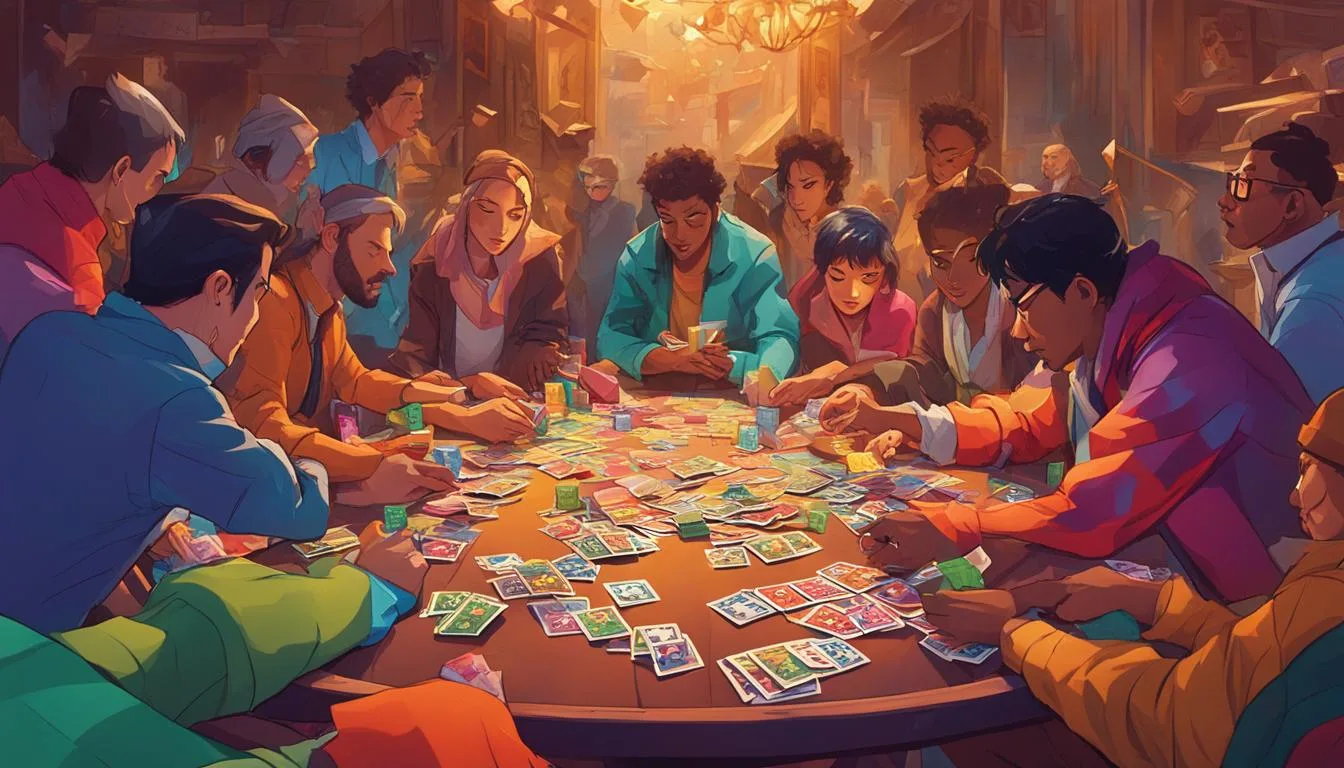
Cooperative Card Games For Team Cardplay bring players together to work toward shared goals instead of competing against each other. These games create a unique bonding experience where everyone wins or loses together, making them perfect for building teamwork and communication skills.
Unlike traditional competitive card games, cooperative games challenge teams to strategize collectively and support each other’s moves. The focus shifts from individual victory to group success, creating memorable moments of triumph when the team overcomes difficult challenges together.
TL;DR
- Pandemic requires teams to cure 4 diseases with only 58 cards before outbreaks destroy the world.
- The Crew mission cards create 50 different cooperative challenges using standard trick-taking mechanics.
- Hanabi players must build fireworks displays without seeing their own cards, relying entirely on teammate hints.
- Flash Point: Fire Rescue gives teams 7 different specialist roles to coordinate rescue operations in burning buildings.
Cooperative Card Games For Team Cardplay
The beauty of cooperative card games lies in their ability to transform competition into collaboration. Players must share information, plan together, and make sacrifices for the greater good of the team’s objectives.
These games often feature escalating difficulty and time pressure that forces teams to communicate efficiently. Success depends on each player understanding their role while staying aware of how their actions affect the entire group’s strategy.
Essential Cooperative Card Games
Pandemic
Pandemic stands as the gold standard for cooperative card games, challenging teams to save the world from four deadly diseases. Players take on specialized roles like Medic, Scientist, or Dispatcher, each with unique abilities that must work together to find cures.
The game uses a deck of infection cards that spread diseases across the globe while players race against time. Teams must balance treating immediate outbreaks with long-term research goals, creating intense decision-making moments that require everyone’s input.
The Crew: The Quest for Planet Nine
The Crew reimagines traditional trick-taking games by adding cooperative mission objectives. Teams work together to complete specific card combinations while following standard trick-taking rules, creating a perfect blend of familiar mechanics and fresh challenges.
Each mission presents different goals like having certain players win specific tricks or avoiding particular cards. The game includes 50 progressive missions that gradually increase in complexity, ensuring long-term replay value for dedicated groups.
Hanabi
Hanabi creates one of the most unique cooperative experiences by preventing players from seeing their own cards. Teams must build perfect fireworks displays by giving limited hints about each other’s hands while managing a shared pool of information tokens.
The communication restrictions force teams to develop their own shorthand and timing strategies. Success requires reading teammates’ intentions and making educated guesses based on incomplete information, similar to card games that challenge your memory.
Start with Clear Roles
Assign specific responsibilities to each team member during setup. This prevents decision paralysis and ensures everyone contributes meaningfully to the group’s success.
Advanced Cooperative Experiences
Flash Point: Fire Rescue
Flash Point: Fire Rescue transforms teams into firefighting crews racing to rescue victims from burning buildings. Each player chooses a specialist role with unique equipment and abilities, from the Paramedic who treats injured victims to the Driver who operates the fire truck.
The game uses action points and dice rolls to simulate the unpredictable nature of fire spread. Teams must coordinate entry points, manage limited water supplies, and adapt quickly when flames cut off planned escape routes.
Spirit Island
Spirit Island flips the colonization theme by casting players as spirits defending their island home from invaders. Each spirit has a unique deck of power cards that grow stronger as the game progresses, requiring teams to plan several turns ahead.
The game features complex interactions between different spirit powers and escalating invader actions. Success demands careful resource management and precise timing of devastating combo attacks that clear entire regions of threats.
Building Team Communication
Effective communication separates winning cooperative teams from struggling groups. Players must share relevant information clearly while avoiding analysis paralysis that slows down decision-making processes.
Many cooperative games include communication restrictions that add challenge and prevent alpha player domination. These limitations force quieter team members to participate actively while teaching everyone to express ideas concisely.
- Information sharing – Clearly state what you know and what you need from teammates.
- Option discussion – Present multiple possible moves and their consequences openly.
- Time management – Keep discussions focused and avoid endless debate cycles.
- Role respect – Trust teammates to execute their specialized functions effectively.
Difficulty and Scaling Options
Most cooperative card games include variable difficulty settings that accommodate different skill levels and group preferences. These options range from introductory modes perfect for newcomers to brutal challenge levels that test experienced teams.
Scaling mechanisms often involve adding more threats, reducing available resources, or introducing time pressure elements. Teams can adjust difficulty between games to maintain appropriate challenge levels as their skills improve over multiple sessions.
- Learn basic rules. Master fundamental mechanics before attempting advanced difficulty levels.
- Try medium difficulty. Test team coordination with moderate challenges that allow mistakes.
- Add complexity gradually. Introduce new modules or higher difficulty only after consistent success.
- Track team progress. Note which strategies work best for your specific group composition.
Social Benefits of Team Play
Cooperative card games strengthen relationships by creating shared challenges that require mutual support and trust. Teams celebrate victories together and learn from defeats without the resentment that competitive losses sometimes create.
These games teach valuable life skills like compromise, active listening, and collective problem-solving. Players learn to value different perspectives and work with various personality types, much like card games for family gatherings and parties that bring diverse groups together.
Frequently Asked Questions
How many players work best for cooperative card games?
Most cooperative card games work well with 2-4 players, though some accommodate up to 6. Smaller groups allow more individual input while larger teams provide diverse perspectives and abilities.
Can one player dominate cooperative games?
Many cooperative games include mechanics to prevent alpha player domination, such as communication restrictions or simultaneous play. Good games ensure every player contributes meaningfully to team success.
Are cooperative card games suitable for children?
Yes, cooperative games teach valuable social skills and eliminate the disappointment of losing. Many titles offer family-friendly themes and adjustable difficulty levels appropriate for mixed-age groups.
How long do cooperative card games typically last?
Game length varies from 30 minutes for quick games like Hanabi to 2 hours for complex games like Spirit Island. Most fall in the 60-90 minute range, perfect for dedicated game sessions.
Final Thoughts
Cooperative Card Games For Team Cardplay offer a refreshing alternative to competitive gaming that builds stronger relationships and communication skills. These games create memorable shared experiences where everyone contributes to collective success or learns from group failures together.
Start with accessible titles like Pandemic or The Crew to introduce your group to cooperative mechanics. Once your team develops good communication habits, explore more complex games that offer deeper strategic challenges and longer-term campaign experiences.
class=”aligncenter size-large wp-image-393″ title=”escape room games”
class=”aligncenter size-large wp-image-394″ title=”cooperative games with unique themes”

As the founder of Friends Game Night, Ryan channels his enthusiasm for gaming into a platform that celebrates the magic of gathering friends around the digital or physical tabletop. Through his website, Ryan shares insightful articles, reviews, and recommendations, aiming to inspire others to create their own memorable gaming moments.
Subscribe to Our Newsletter