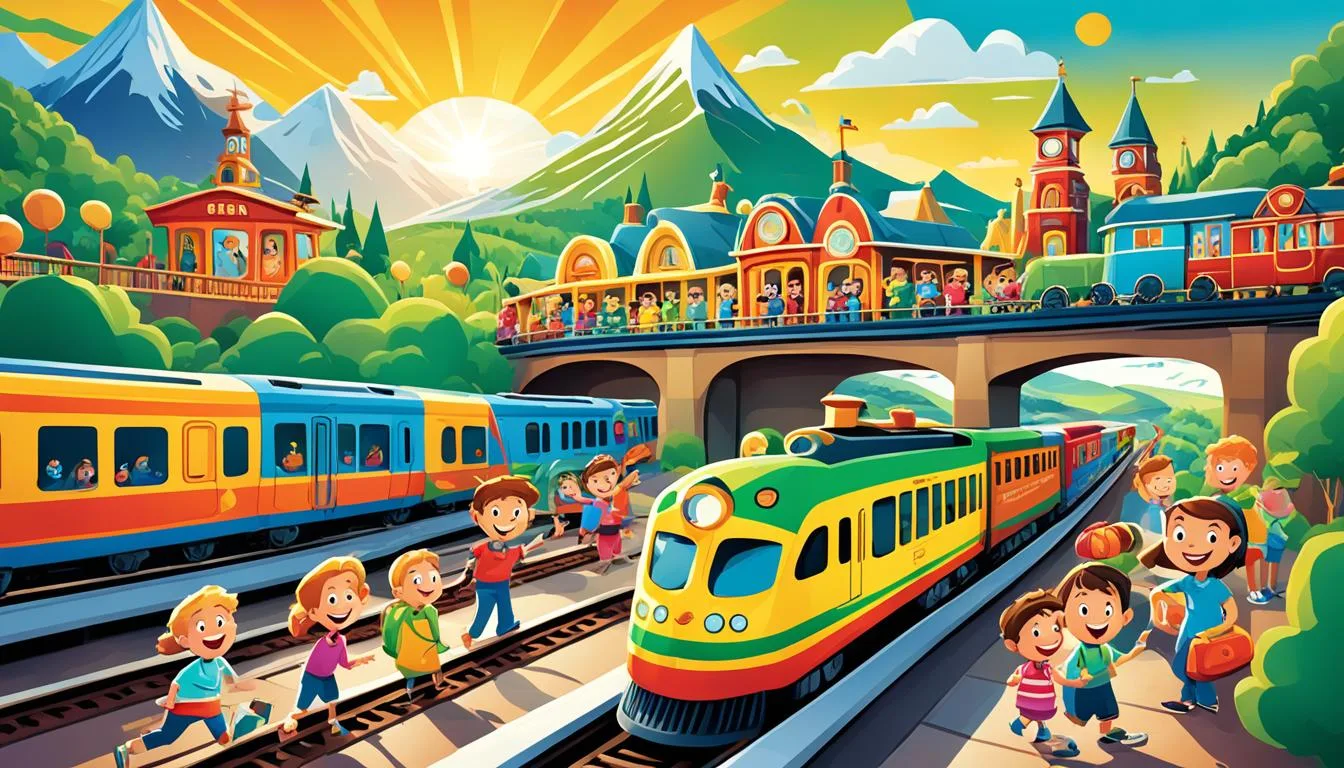
Ticket to Ride brings families together for an exciting railway adventure across iconic train routes. This award-winning board game combines simple rules with strategic depth, making it perfect for players aged 8 and up who want to build railway connections across various maps.
The game’s beautiful artwork and tactile train pieces create an engaging experience that keeps everyone invested. Whether you’re connecting New York to Los Angeles or linking European cities, each route offers meaningful choices without overwhelming complexity.
TL;DR
- Takes 30-60 minutes to play with 2-5 players aged 8 and above.
- Collect colored train cards to claim railway routes worth 1-6 points each.
- Longest continuous route earns a 10-point bonus at game end.
- Over 15 different map versions available including USA, Europe, and Asia.
Ticket to Ride Game Basics
Players collect colored train cards to claim railway routes connecting cities across the map. Each route requires specific colored cards and awards points based on length – longer routes provide exponentially more points.
The game includes destination tickets that give secret missions to connect specific cities. Completing these tickets earns bonus points, but failing to connect them results in point penalties, adding strategic tension to every decision.
Setting Up Your Railway Empire
Each player starts with 45 colored train pieces, four random train cards, and three destination tickets. Players keep at least two destination tickets, returning unwanted ones to the deck.
The board displays a map with colored railway routes connecting major cities. Train cards come in eight colors plus wild locomotive cards that can substitute for any color when claiming routes.
Strategic Gameplay Elements
Success requires balancing multiple objectives while adapting to other players’ moves. Smart players focus on efficient routes that connect their destination tickets while blocking opponents when possible.
Route selection involves calculating point values against card costs and route availability. A six-length route worth 15 points might be worth the investment, but shorter routes often provide better point-per-card ratios.
Card Collection Strategies
- Color focusing – Collect specific colors needed for planned routes.
- Locomotive hoarding – Wild cards provide flexibility for expensive routes.
- Opportunistic claiming – Grab valuable routes when cards align.
- Blocking tactics – Claim routes that prevent opponent connections.
Destination Ticket Management
Drawing additional destination tickets during the game offers more scoring opportunities but increases risk. Experienced players typically draw new tickets only when they’re confident about completing existing ones.
High-value tickets connecting distant cities offer big rewards but require careful planning. Lower-value tickets between nearby cities provide safer, more reliable points.
Route Priority Tip
Always secure your longest route segments first, especially bottleneck connections that other players might block. Short connector routes can usually wait until later turns.
Family-Friendly Appeal
The game’s accessibility makes it perfect for mixed-age groups, similar to other family board games that bring generations together. Rules take minutes to learn, but the strategic depth keeps adults engaged throughout multiple plays.
Beautiful train pieces and colorful maps create visual appeal that draws players in immediately. The satisfying click of placing plastic trains on routes provides tactile feedback that digital games can’t match.
Educational Benefits
Players naturally learn geography while connecting cities across the map. Children develop strategic thinking skills by planning efficient routes and managing limited resources.
The game teaches risk assessment through destination ticket decisions and route timing. These lessons apply beyond gaming, helping develop critical thinking skills useful in daily life.
Popular Map Variations
The original USA map remains the most popular starting point for new players. Europe adds stations and tunnels for increased complexity, while other maps introduce unique mechanics like ferries, mountain passes, and different route types.
Each map offers distinct strategic challenges and replayability. The Switzerland map works perfectly for 2-3 players, while the larger maps accommodate full five-player groups comfortably.
Expansion Options
- Europe – Adds train stations and underground tunnel routes.
- Nordic Countries – Features ferries and a more compact map design.
- Asia – Introduces team play and mountain pass mechanics.
- India – Adds mandala tokens and double routes between cities.
Competitive Tournament Scene
World championship tournaments showcase advanced strategies and optimal play patterns. Tournament players often memorize efficient route combinations and practice rapid card counting techniques.
Local game stores frequently host Ticket to Ride tournaments that welcome players of all skill levels. These events provide opportunities to learn advanced tactics while enjoying friendly competition in a structured environment.
Frequently Asked Questions
How long does a typical game take?
Most games finish in 30-60 minutes depending on player count and experience level. New players might take slightly longer while learning optimal strategies.
Can younger children play without help?
Children aged 8-10 can play independently after learning the rules, though they may need occasional guidance with route planning and destination ticket decisions.
Which map should beginners start with?
The original USA map provides the best introduction with straightforward routes and clear connections. Save the more complex European maps for after mastering the basic gameplay.
Is the game worth buying if we only have 2 players?
Yes, though the experience differs from larger groups since there’s less route blocking and competition. Consider the smaller map expansions designed specifically for 2-3 players.
Final Thoughts
Ticket to Ride offers the perfect balance of accessibility and strategy that makes it a standout choice for family game collections. The combination of simple rules, beautiful components, and meaningful decisions creates memorable experiences that bring people back to the table repeatedly.
Start with the classic USA map and explore the various expansions as your family develops preferences for different mechanics and themes. Like other engaging strategy board games, each play reveals new tactical possibilities while maintaining the core fun that makes railway adventures so appealing.

As the founder of Friends Game Night, Ryan channels his enthusiasm for gaming into a platform that celebrates the magic of gathering friends around the digital or physical tabletop. Through his website, Ryan shares insightful articles, reviews, and recommendations, aiming to inspire others to create their own memorable gaming moments.
Subscribe to Our Newsletter