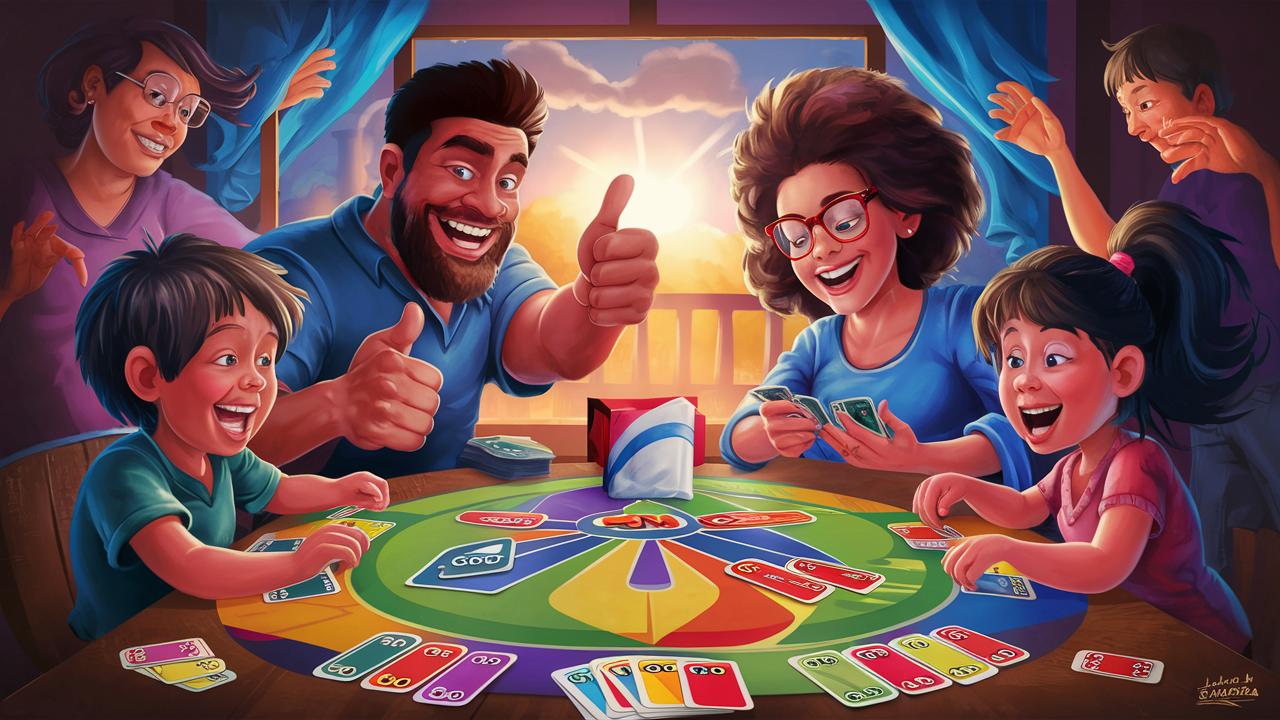
Uno gives you a serious advantage. The right strategies help you manage your hand better, time your action cards perfectly, and keep opponents guessing until you shout “Uno!”
TL;DR
- Hold onto Wild Draw Four cards until you have 3 or fewer cards remaining for maximum impact.
- Play action cards (Skip, Reverse, Draw Two) when opponents have 2-3 cards left to disrupt their winning attempts.
- Keep one card of each color in your hand when possible to avoid being stuck when colors change.
- Watch for players who forget to say “Uno” – you can force them to draw 4 penalty cards.
Uno Strategy Fundamentals
Smart card management forms the foundation of winning Uno consistently. Players who succeed understand that every discard decision affects their future options and their opponents’ chances.
The key is balancing offense and defense – getting rid of cards quickly while preventing others from winning. This means thinking two or three moves ahead rather than just matching the current card on the pile.
Color Management Tactics
Maintaining color diversity in your hand prevents opponents from trapping you with strategic color changes. Try to keep at least one card of each color when your hand size allows it.
When you’re forced to play your last card of a specific color, prioritize keeping colors that appeared frequently in recent plays. Other players likely have those colors too, giving you better matching opportunities.
Action Card Timing
Action cards become powerful weapons when played at the right moment. Save Skip and Reverse cards for situations where opponents have low card counts – disrupting someone with 2-3 cards can buy you several more turns.
Draw Two cards work best against players who seem close to winning. The forced card draw plus the turn skip often derails their victory plans completely.
Wild Card Mastery
Wild cards give you control over the game flow, but using them too early wastes their strategic value. Regular Wild cards help when you’re stuck with a bad color situation, but timing matters enormously.
Wild Draw Four cards represent your nuclear option – they’re most effective when played from a small hand size. Playing one when you have 7+ cards gives opponents too much time to recover and potentially challenge your play.
Challenge Rules Strategy
Understanding challenge rules adds another layer to Wild Draw Four strategy. You can only play this card when you genuinely can’t match the current color, and opponents can challenge suspicious plays.
If challenged and you played legally, the challenger draws 6 cards total. If challenged and you cheated, you draw 4 cards instead of the intended target – a significant penalty that smart opponents will exploit.
Memory Game Advantage
Pay attention to which colors other players struggle with during the game. When you control color changes with Wild cards, choose colors that put maximum pressure on opponents with large hands.
Reading Your Opponents
Successful Uno players watch for tells and patterns in their opponents’ behavior. Someone who hesitates before playing might be making a difficult choice between keeping a good card or playing it.
Players who quickly match colors often have multiple cards of that color. Those who pause and play action cards instead might be running low on the current color.
Hand Size Psychology
When opponents have many cards, they’re less likely to have the specific card needed to counter your plays. This makes it safer to play powerful action cards without immediate retaliation.
Conversely, opponents with few cards become dangerous and unpredictable. They might be holding powerful cards as insurance, waiting for the perfect moment to play them.
Defensive Strategies
Defense wins Uno games just as much as aggressive offense. Recognizing when opponents threaten to win lets you disrupt their plans before they declare victory.
Key defensive plays include using action cards to skip dangerous opponents, changing colors to ones they seem to lack, and forcing card draws when their hands get small.
Blocking Techniques
Reverse cards become especially powerful in smaller games where they effectively skip opponents and return play to you quickly. In larger groups, Reverse cards can target specific players by controlling turn order flow.
Skip cards work best as direct counters to threatening opponents. If someone has 2-3 cards remaining, skipping their turn gives other players chances to change the game state before they can win.
Advanced Tactical Concepts
Expert players think about card probability and manage their hands like poker players manage betting positions. This includes understanding which cards opponents likely hold based on previous plays.
Research from cognitive psychology studies shows that strategic card games improve pattern recognition and decision-making skills across age groups.
End Game Execution
The final few cards require perfect timing and sequencing. Play your most restrictive cards (specific numbers or colors) earlier in your end game sequence, saving flexible cards like action cards and Wilds for last.
Remember the “Uno” declaration rule – forgetting to say it when you have one card left results in a 4-card penalty if opponents catch you. This rule alone can completely change game outcomes.
Teaching Uno Strategy to Kids
Children learn Uno strategy best through guided practice rather than complex rule explanations. Start with basic concepts like color matching and gradually introduce tactical elements as they master fundamentals.
Focus on helping kids recognize when opponents are getting close to winning – this awareness naturally leads to defensive play instincts. Many family board games share this same learning progression from simple rules to strategic depth.
Building Strategic Thinking
Encourage kids to think about what cards opponents might need based on recent plays. This develops pattern recognition skills that transfer to other strategic games and problem-solving situations.
Practice scenarios where kids have to choose between different plays help them understand consequence thinking – a crucial life skill disguised as game strategy. Educational research from the National Institute of Child Health demonstrates how strategic games enhance cognitive development in children.
Frequently Asked Questions
When should I play my Wild Draw Four card?
Play Wild Draw Four cards when you have 3 or fewer cards remaining for maximum impact. Playing them earlier gives opponents too much time to recover from the penalty.
Can I challenge a Wild Draw Four card?
Yes, you can challenge if you suspect the player had a legal play available. If your challenge succeeds, they draw 4 cards instead of you drawing 4.
What happens if I forget to say “Uno”?
If another player catches you before the next player takes their turn, you must draw 4 penalty cards. Always remember to declare “Uno” when playing your second-to-last card.
Should I keep multiple cards of the same color?
Generally no – maintaining color diversity gives you more play options. Keep multiple cards of the same color only if they include useful action cards or if your hand is very large.
Final Thoughts
Uno Strategy transforms this beloved family card game from simple fun into engaging tactical competition that everyone can enjoy. The beauty of these strategies lies in their accessibility – kids can learn basic concepts while adults explore deeper tactical layers.
Start implementing these techniques gradually during your next game night and watch how strategic thinking enhances everyone’s enjoyment of this classic card game.

As the founder of Friends Game Night, Ryan channels his enthusiasm for gaming into a platform that celebrates the magic of gathering friends around the digital or physical tabletop. Through his website, Ryan shares insightful articles, reviews, and recommendations, aiming to inspire others to create their own memorable gaming moments.
Subscribe to Our Newsletter