TL;DR
- Games work best for large groups when 6+ people can participate at the same time without waiting for turns.
- Interactive elements like simultaneous voting, team challenges, and real-time responses keep everyone engaged throughout the game.
- The most successful large group games take 30-60 minutes to complete, preventing energy from dropping off.
- Physical movement, creative expression, and social deduction elements create natural interaction between all players.
What Makes A Party Game Interactive For Large Friend Groups
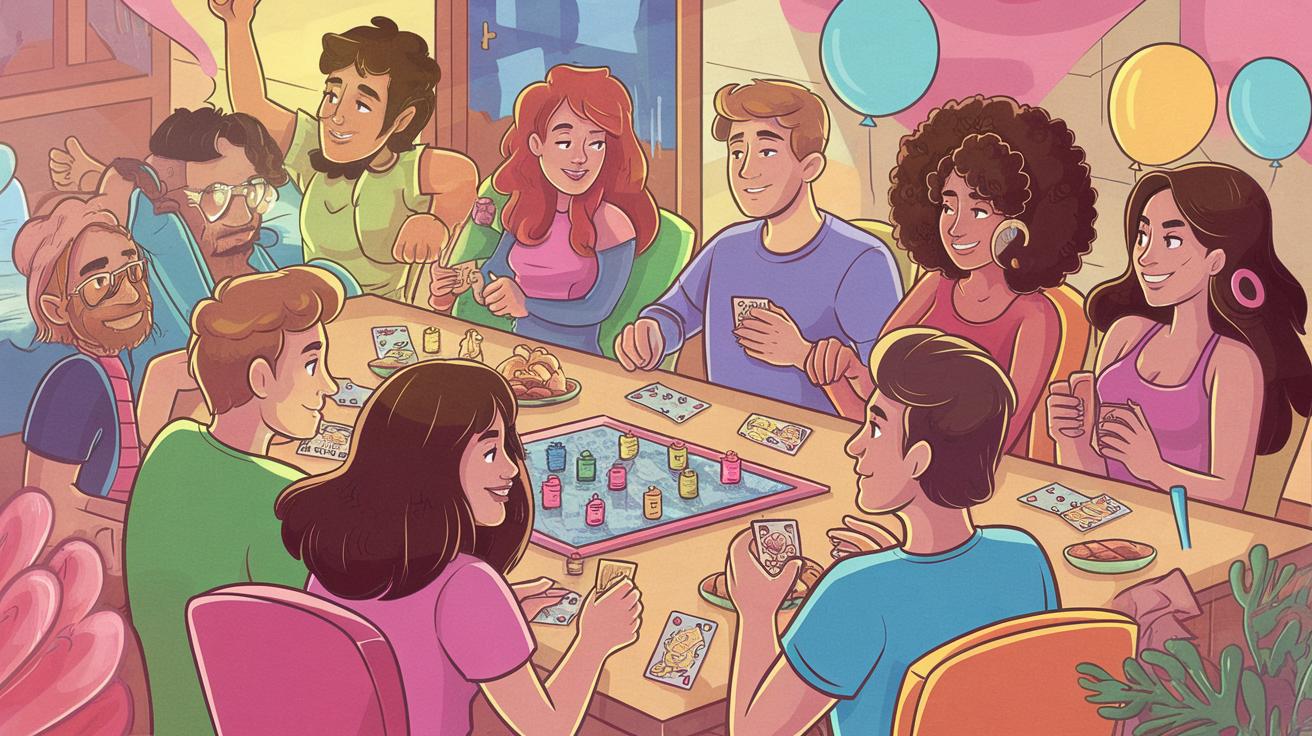
First Posted March 26, 2026 | 🕒 Last Updated on March 27, 2026 by Ryan ConlonInteractive party games for large groups share several key characteristics that separate them from regular board games. They eliminate downtime by engaging multiple players simultaneously and create natural conversation starters that help friends connect.
The most important factor is simultaneous participation. Games like Wavelength or Just One allow everyone to contribute at the same time, whether they’re writing clues, making guesses, or voting on answers.
Simultaneous Action Elements
The best interactive games use mechanics where everyone acts at once. This prevents the common problem of large groups where half the players check their phones while waiting for their turn.
- Real-time voting – Players vote simultaneously on outcomes, predictions, or preferences
- Simultaneous writing – Everyone writes answers, clues, or responses at the same time
- Team-based challenges – Multiple teams compete in parallel activities
- Creative expression – Drawing, acting, or building happens concurrently across the group
Social Interaction Mechanics
Interactive games create moments where friends naturally talk to each other rather than just focusing on game rules. The game becomes a framework for social connection rather than the main focus.
Discussion-based elements work particularly well because they let personality shine through. Games that ask players to defend choices, explain reasoning, or share stories create genuine interaction.
Player-to-Player Engagement
The most engaging large group games create direct connections between participants. Rather than everyone interacting only with the game materials, players respond to each other’s contributions.
- Negotiation elements – Players must convince or bargain with each other
- Social deduction – Friends analyze each other’s behavior and make accusations
- Collaborative storytelling – Everyone adds to shared narratives or scenarios
- Opinion sharing – Games that reveal preferences and spark friendly debates
Physical and Energetic Components
Movement and energy help large groups stay engaged when attention might otherwise drift. Quick party games that incorporate physical elements work especially well for keeping momentum high.
Acting, gesturing, and moving around the room naturally breaks up the seated discussion format that can become stale with big groups. Even simple activities like standing to vote or moving to different sides of the room add interactive energy.
Performance and Expression
Games that encourage performance give naturally outgoing friends chances to shine while providing structure for quieter participants to contribute comfortably. The key is balancing spotlight moments with group participation.
- Acting challenges. Charades-style games where multiple people can guess simultaneously.
- Drawing activities. Everyone draws while others guess, creating multiple focal points.
- Impression games. Players take turns performing while the group responds together.
- Sound-based games. Humming, beatboxing, or making sound effects for group guessing.
Perfect Group Size Strategy
Split groups larger than 12 into teams of 4-6 people each. This maintains the energy of large group interaction while ensuring everyone gets meaningful participation time.
Time Management and Pacing
Interactive games need tight pacing to prevent large groups from losing focus. The best options keep rounds short and switch between different types of activities to maintain interest.
Variety within the game structure helps accommodate different personality types in your friend group. Party games for large friend groups work best when they alternate between high-energy moments and strategic thinking.
Round Structure
Successful large group games use predictable round structures that let everyone know when their participation moment is coming. This reduces the anxiety some people feel in big social settings.
- Short rounds – 3-5 minutes per round keeps attention focused
- Clear transitions – Obvious breaks between activities help groups reset
- Progressive difficulty – Games get more challenging as players warm up
- Multiple win conditions – Different ways to score points throughout the game
Accessibility and Inclusion
Interactive games for large groups must work for friends with different comfort levels and abilities. The best games offer multiple ways to participate so everyone finds their preferred interaction style.
Consider how introducing games to new players works in large group settings. Interactive elements should feel natural rather than forced, allowing people to ease into participation.
Multiple Participation Styles
Great interactive games accommodate both extroverted and introverted friends by offering various ways to contribute meaningfully to the group experience.
- Verbal contributions – Speaking, explaining, or storytelling options
- Written responses – Anonymous or private ways to participate
- Physical actions – Gestures, movement, or demonstration opportunities
- Strategic thinking – Behind-the-scenes planning and decision-making roles
Frequently Asked Questions
How many people can play interactive party games?
Most interactive party games work well with 6-20 people, though some can accommodate even larger groups by splitting into teams.
Do interactive games require special equipment?
The best interactive party games need minimal equipment – often just paper, pens, and sometimes a timer or smartphone app.
How long should interactive games last for large groups?
Plan for 30-60 minutes per game to maintain energy and attention, with option to extend if the group is highly engaged.
What if some friends don’t want to participate actively?
Good interactive games offer observer roles or team-based options where less outgoing friends can contribute without being in the spotlight.
Final Thoughts
What Makes A Party Game Interactive For Large Friend Groups comes down to creating simultaneous participation opportunities that keep everyone engaged throughout the experience. The most successful games balance high-energy moments with strategic thinking while accommodating different personality types and comfort levels.
Start with games that emphasize team collaboration and real-time responses. Easy setup party games work especially well when you want to test what interaction styles your specific friend group enjoys most.
—
##
class=”aligncenter size-large wp-image-2488″ title=”interactive group activities”

As the founder of Friends Game Night, Ryan channels his enthusiasm for gaming into a platform that celebrates the magic of gathering friends around the digital or physical tabletop. Through his website, Ryan shares insightful articles, reviews, and recommendations, aiming to inspire others to create their own memorable gaming moments.
Subscribe to Our Newsletter