
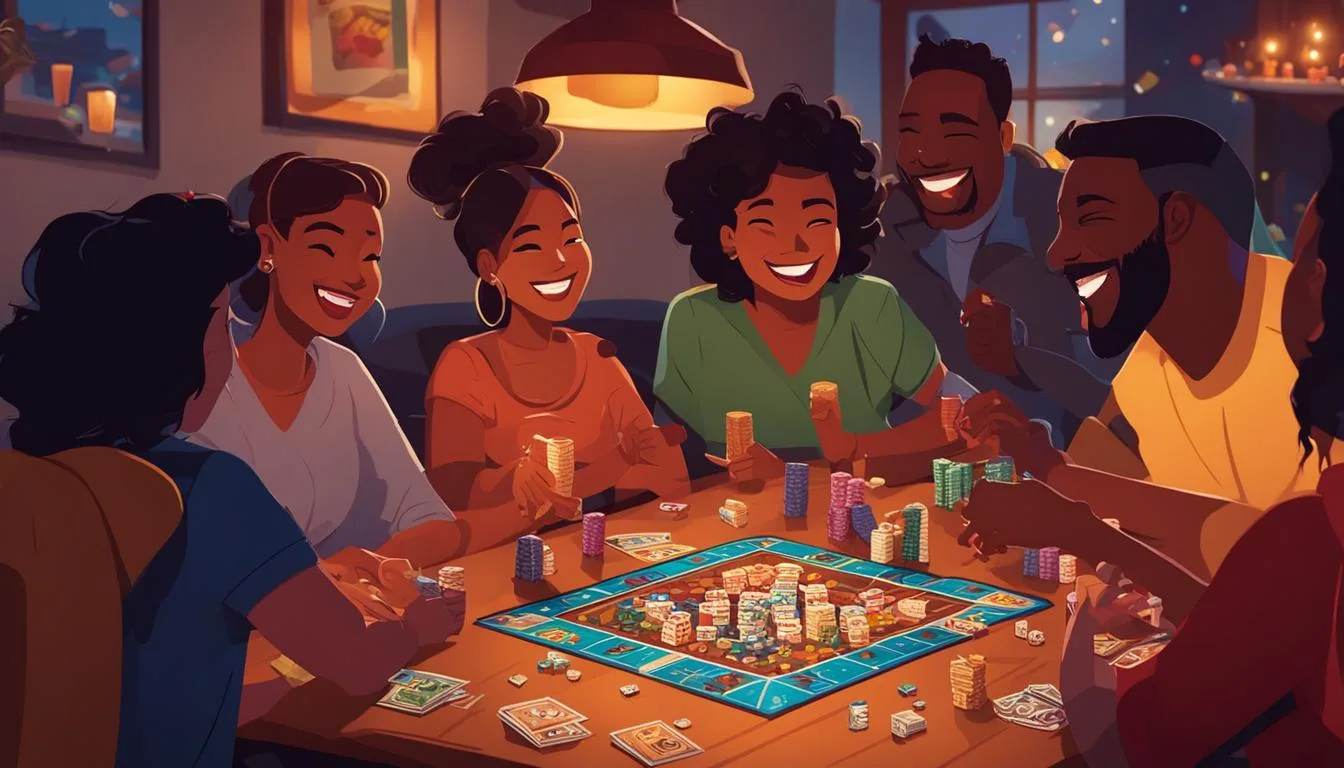
Board Party Games bring people together around the table for laughter, competition, and memorable moments that last long after the game ends. These games are designed specifically for larger groups, combining the strategic elements of traditional board games with the social energy that makes parties unforgettable.
Unlike regular board games that work best with 2-4 players, party games accommodate bigger crowds while keeping everyone engaged throughout the experience. The best party games balance easy-to-learn rules with enough depth to keep seasoned gamers interested.
TL;DR
- Most party board games accommodate 6-12 players compared to 2-4 for traditional games.
- Games like Codenames and Wits & Wagers take under 5 minutes to explain but provide hours of entertainment.
- Social deduction games represent 40% of popular party board games because they create natural conversation and suspense.
- The average party game session lasts 30-60 minutes, perfect for maintaining energy without overstaying welcome.
Board Party Games for Every Group
The magic of party board games lies in their ability to break down social barriers and get strangers laughing together within minutes. These games work because they focus on interaction rather than complex mechanics, making them accessible to players of all experience levels.
Most successful party games share common traits that make them crowd favorites. They feature simple rules that anyone can grasp quickly, encourage player interaction through discussion or teamwork, and create moments of surprise that generate genuine reactions from the group.
Word-Based Party Games
Word games dominate the party scene because they tap into everyone’s natural language skills while creating hilarious misunderstandings. Codenames Pictures stands out as a perfect example, using visual clues instead of words to accommodate players who might struggle with vocabulary-heavy games.
- Codenames – Teams compete to identify their agents using one-word clues from their spymaster.
- Wavelength – Players guess where concepts fall on a spectrum using cryptic hints.
- Just One – Everyone writes clues to help one player guess a word, but duplicate clues get eliminated.
- Telestrations – The telephone game meets Pictionary for guaranteed laughs.
Social Deduction Games
These games create natural drama as players try to figure out who’s lying and who’s telling the truth. Spyfall exemplifies this genre by putting one player in the dark about the shared location while everyone else tries to identify the outsider.
- The Resistance – Rebels attempt missions while spies try to sabotage from within.
- One Night Ultimate Werewolf – Quick rounds of deduction where villagers hunt werewolves in their midst.
- Secret Hitler – Political intrigue as liberals try to stop fascists from taking control.
- Avalon – Knights of the round table face betrayal on their noble quests.
Games That Scale With Your Group
The best party games adjust smoothly as your group size changes throughout the evening. Some games work better with specific numbers, while others maintain their fun factor whether you have 6 players or 12.
Games with team-based mechanics often handle larger groups more gracefully than individual player games. When players can work together, late arrivals can easily join existing teams without disrupting the flow.
Trivia and Knowledge Games
Wits & Wagers revolutionized party trivia by letting players bet on answers even when they don’t know the correct response themselves. This approach keeps everyone involved regardless of their knowledge base.
- Form teams of 2-4 players. This balances different knowledge areas and keeps everyone engaged.
- Read questions that have numerical answers. This eliminates arguing over subjective responses.
- Let players bet on any answer. Even wrong guesses can win points if they’re closest to correct.
- Keep rounds short. Move quickly through questions to maintain energy levels.
Mix Game Types Throughout the Evening
Start with simple icebreaker games, move to more involved strategy games mid-evening, then finish with high-energy party games. This rhythm keeps everyone engaged as energy levels naturally shift.
Creative and Artistic Party Games
Artistic games work brilliantly at parties because they produce tangible results that everyone can laugh about later. Dixit uses beautiful artwork to inspire storytelling, creating moments of genuine creativity mixed with strategic thinking.
These games often work well as conversation starters because they reveal personality traits and creative thinking styles. Players remember funny drawings or clever interpretations long after the scores are forgotten.
Drawing and Creativity Games
- Dixit – Players create stories inspired by abstract artwork and guess which story matches which card.
- Fake Artist Goes to New York – Everyone draws part of a picture, but one person doesn’t know what they’re drawing.
- Pictomania – Speed drawing where everyone draws and guesses simultaneously.
- A Fake Artist Goes to New York – Collaborative drawing with a hidden imposter trying to blend in.
High-Energy Movement Games
Some parties benefit from games that get people moving and acting silly together. These work especially well later in the evening when people are more comfortable with each other.
Movement games require adequate space and understanding neighbors, but they create unforgettable shared experiences. The physical comedy element often breaks down remaining social barriers.
Action and Performance Games
- Spaceteam – Frantic card game where players shout technical jargon at each other to repair a spaceship.
- Monikers – Three rounds of charades with the same cards, getting progressively more restrictive.
- Times Up – Describe, act out, then give one-word clues for the same set of famous people.
- Werewords – Twenty questions meets social deduction with a werewolf twist.
Frequently Asked Questions
How many people do you need for board party games?
Most party board games work best with 6-10 players, though many accommodate up to 12 or more. Games like The Resistance actually improve with larger groups because they create more complex social dynamics.
What makes a good party board game?
Good party games have simple rules that take under 5 minutes to explain, encourage player interaction, and accommodate different skill levels. They should create memorable moments and keep everyone engaged regardless of who’s winning.
How long should party board games last?
Most successful party games run 30-60 minutes per session. This length maintains energy without causing fatigue, and allows time for multiple games or other party activities throughout the evening.
Can party board games work for mixed age groups?
Many party games work well across age groups because they rely on creativity, social skills, and common knowledge rather than specialized gaming experience. Games like Codenames and Dixit appeal to both teenagers and adults.
Final Thoughts
Board Party Games create shared experiences that bring people together in ways that video games or individual entertainment simply cannot match. The combination of face-to-face interaction, friendly competition, and collaborative problem-solving makes these games perfect for building stronger social connections.
Choose games that match your group’s energy level and comfort with silliness, then prepare for evenings filled with laughter and stories you’ll retell for years. Start with one crowd-pleaser like Codenames or Wits & Wagers, then expand your collection based on what generates the most excitement around your table.

As the founder of Friends Game Night, Ryan channels his enthusiasm for gaming into a platform that celebrates the magic of gathering friends around the digital or physical tabletop. Through his website, Ryan shares insightful articles, reviews, and recommendations, aiming to inspire others to create their own memorable gaming moments.