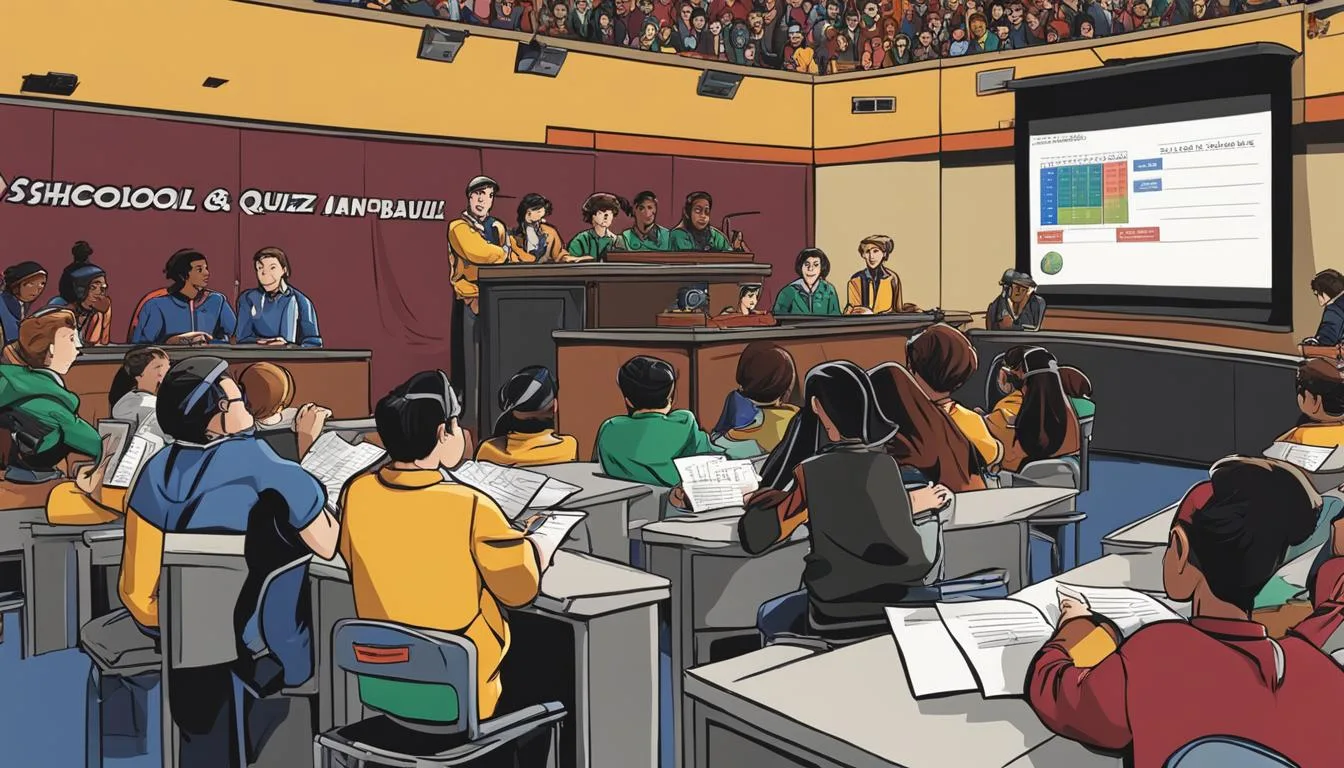
Quiz Bowl High School Trivia Competition represents one of the most exciting academic challenges available to students today. These fast-paced tournaments test knowledge across subjects from literature and science to history and pop culture. Teams of four students work together, buzzing in to answer questions that range from straightforward facts to complex multi-part problems.
High school quiz bowl has grown tremendously over the past decade, with thousands of schools participating in local, regional, and national competitions. The format rewards quick thinking, broad knowledge, and strong teamwork skills that serve students well beyond their high school years.
TL;DR
- Quiz bowl teams consist of 4 players who compete in tossup and bonus question rounds lasting 20 questions each.
- The National Academic Quiz Tournaments (NAQT) and Academic Competition Federation (ACF) host over 400 high school tournaments annually.
- Top quiz bowl players can earn college scholarships worth $2,000 to $10,000 per year at participating universities.
- Practice sessions should include at least 200 tossup questions weekly to build the speed and accuracy needed for competition.
Quiz Bowl High School Trivia Competition Format
Quiz bowl matches follow a structured format that keeps games moving at a rapid pace. Each game consists of 20 tossup questions worth 10 points each, followed by bonus questions worth up to 30 points when a team answers the tossup correctly.
Players buzz in during tossup questions as soon as they know the answer, even before the moderator finishes reading. Wrong answers during the first half of a tossup question result in a 5-point penalty, while incorrect answers in the second half simply end that player’s chance to respond.
Tossup Question Categories
- Literature – Poetry, novels, short stories, and literary criticism from all time periods.
- History – World history, American history, and current events with emphasis on significant figures and events.
- Science – Biology, chemistry, physics, earth science, and mathematics at the high school level.
- Fine Arts – Classical music, visual arts, opera, and dance from various cultures and periods.
- Geography – World geography, capitals, physical features, and cultural geography.
- Mythology and Religion – Stories and beliefs from various world cultures and religious traditions.
Building a Competitive Quiz Bowl Team
Successful quiz bowl teams combine players with different academic strengths and complementary knowledge bases. The ideal team includes specialists in science, literature, history, and fine arts who can also contribute across multiple categories.
Coaches typically recruit students from advanced placement classes, academic honor societies, and subject-specific clubs. Team chemistry matters just as much as individual knowledge since players must work together during bonus rounds and practice sessions.
Essential Team Roles
- Team Captain. Usually the most experienced player who manages substitutions and bonus discussions.
- Science Specialist. Handles biology, chemistry, physics, and math questions with speed and accuracy.
- Literature Expert. Covers poetry, novels, short stories, and literary analysis from all periods.
- History Buff. Focuses on American and world history plus current events and geography.
Training Strategies for Quiz Bowl Success
Effective quiz bowl preparation requires consistent practice with high-quality questions and regular exposure to tournament conditions. Teams should practice at least three times per week, with sessions lasting 90 minutes to simulate actual competition length.
The best training programs use a mix of individual study, team practice rounds, and specialized drills. Players need to develop both breadth of knowledge and the quick recall skills that separate good teams from great ones.
Buzzer Speed Training
Practice buzzing in on familiar questions to develop muscle memory and optimal timing. Start with easier questions and gradually increase difficulty as your speed improves.
Study Resources and Materials
- Question Databases – NAQT, ACF, and high school-specific question sets for practice.
- Academic Textbooks – AP-level books provide the depth needed for bonus questions.
- Reference Works – Encyclopedias, atlases, and biographical dictionaries for fact-checking.
- Online Resources – Quizbowldb.com and other sites offer searchable question archives.
Major Quiz Bowl Tournaments and Competitions
The high school quiz bowl calendar runs from September through June, with local tournaments leading to state and national championships. Different organizations host tournaments with varying difficulty levels and question styles.
Regional tournaments serve as stepping stones to larger competitions, giving teams experience with different moderators and question sets. The most prestigious events draw hundreds of schools from across the country.
Key Tournament Organizations
- NAQT (National Academic Quiz Tournaments) – Hosts the High School National Championship Tournament each June.
- Academic Competition Federation (ACF) – Organizes regionally-based tournaments with college-style questions.
- Questions Unlimited – Provides questions for many state-level championships and invitationals.
- PACE (Partnership for Academic Competition Excellence) – Runs the National Scholastics Championship.
Benefits Beyond Competition
Quiz bowl participation provides academic and social benefits that extend well beyond winning tournaments. Students develop research skills, public speaking confidence, and the ability to work under pressure.
Many former quiz bowl players credit the activity with improving their performance in college coursework and standardized tests. The broad knowledge base required for competition helps students make connections between different academic disciplines.
College and Career Advantages
- Scholarship Opportunities. Many universities offer partial scholarships for quiz bowl team members.
- Enhanced College Applications. Quiz bowl demonstrates intellectual curiosity and academic commitment.
- Networking Benefits. Players often maintain connections with teammates and competitors throughout their careers.
- Critical Thinking Skills. The activity develops analytical abilities valued in many professions.
Students interested in academic competition might also enjoy exploring trivia party games that can help build knowledge in a more relaxed setting. For those looking to practice question-and-answer formats, Jeopardy board games offer excellent preparation for buzzer-based competitions.
Getting Started in Quiz Bowl
New players should focus on building fundamental knowledge while learning the unique aspects of quiz bowl competition. Start by attending practice sessions as an observer to understand the pace and question styles.
Most successful players begin with subjects they already know well, then gradually expand into new areas. The key is consistent practice rather than trying to master everything at once.
First Steps for New Players
- Join Practice Sessions. Attend team meetings regularly to learn the format and build knowledge.
- Focus on Strong Subjects. Build confidence by excelling in your best academic areas first.
- Study Actively. Read questions aloud and practice buzzing in at appropriate moments.
- Learn from Veterans. Experienced players can teach strategy and share study techniques.
Quiz bowl teams often use resources similar to those found in challenging trivia questions to build their knowledge base. Additionally, trivia night strategies can help players develop the mental approach needed for high-pressure competition.
Frequently Asked Questions
How many students can be on a quiz bowl team?
Teams consist of four active players during matches, but schools can have larger rosters for practice and substitutions. Most teams carry 6-10 total members to account for scheduling conflicts and different tournament lineups.
What grade levels can participate in high school quiz bowl?
Students in grades 9-12 can participate in high school quiz bowl competitions. Some tournaments also offer middle school divisions for younger students to gain experience.
How much does it cost to participate in quiz bowl?
Tournament entry fees typically range from $40-120 per team, depending on the competition level. Schools may also need to budget for travel expenses and practice materials.
Can homeschooled students participate in quiz bowl?
Many tournaments welcome homeschool teams, and some areas have homeschool-specific leagues. Check with local tournament directors about eligibility requirements and registration procedures.
Final Thoughts
Quiz Bowl High School Trivia Competition offers students an unmatched opportunity to challenge themselves academically while building lasting friendships with like-minded peers. The skills developed through quiz bowl – quick thinking, broad knowledge, and grace under pressure – serve students well in college and beyond.
Whether your school has an established program or you’re interested in starting a new team, quiz bowl provides a rewarding way to make learning competitive and fun. Start by finding a local tournament or connecting with experienced coaches in your area.

As the founder of Friends Game Night, Ryan channels his enthusiasm for gaming into a platform that celebrates the magic of gathering friends around the digital or physical tabletop. Through his website, Ryan shares insightful articles, reviews, and recommendations, aiming to inspire others to create their own memorable gaming moments.
Subscribe to Our Newsletter