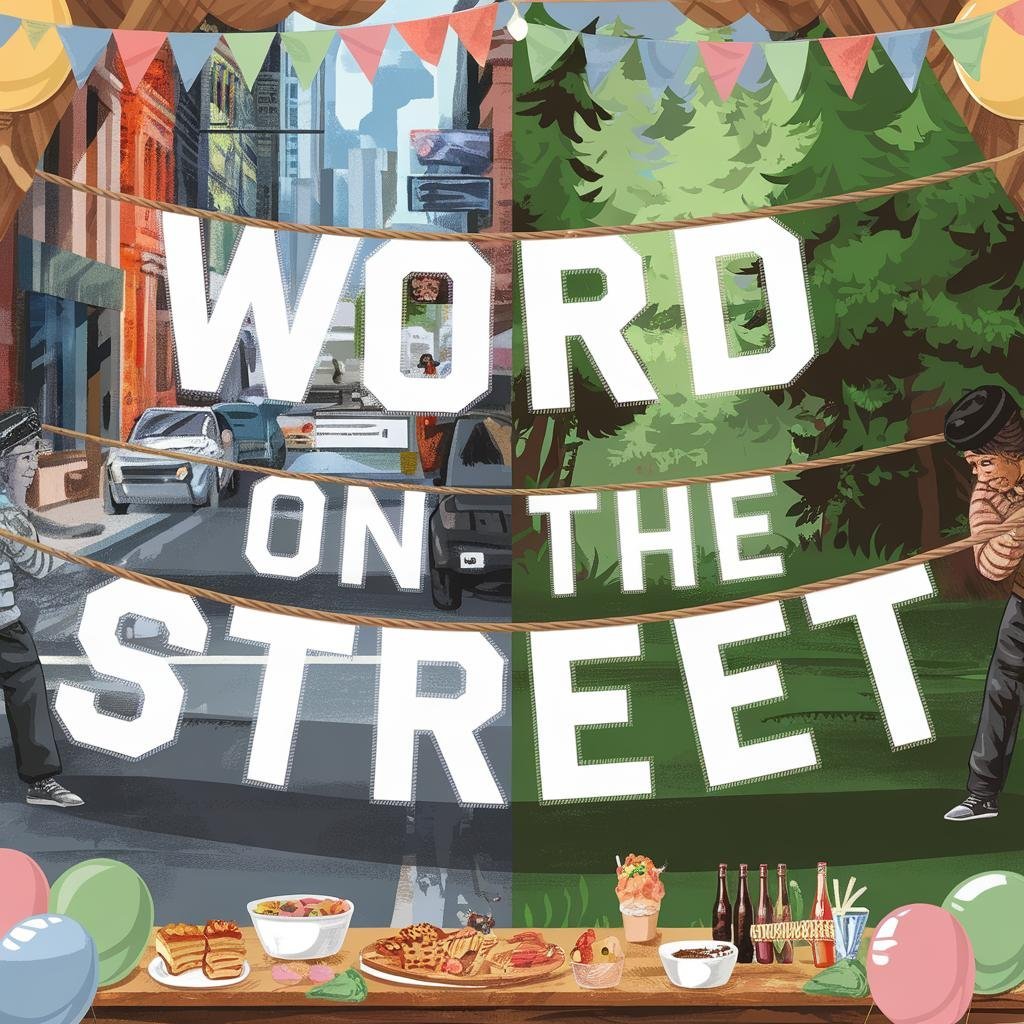
Word On The Street transforms the classic tug-of-war concept into an exciting letter-grabbing battle that gets everyone thinking fast. This unique board game combines vocabulary skills with strategic positioning as teams compete to literally pull letters across to their side of the street.
The game creates instant excitement as players race against the clock to come up with words while physically moving letter tiles. Whether you’re hosting a family game night or looking for something different with friends, this word game delivers laughs and friendly competition in equal measure.
TL;DR
- Teams have 30 seconds to think of words and pull matching letters toward their side of a game board street.
- Letters that reach either team’s side of the street are captured and removed from play for the round.
- The first team to capture 8 letter tiles wins the game, typically taking 20-30 minutes total.
- Works best with 2-8 players divided into two teams for maximum engagement and strategy.
Word On The Street Game Mechanics
The game board features a street with letter tiles positioned in the middle neutral zone. Teams sit on opposite sides and take turns drawing category cards that prompt them to think of relevant words.
When a team draws a card, they have 30 seconds to discuss and agree on a word that fits the category. Once they announce their word, they move each letter in that word one space toward their side of the street.
Letter Movement Rules
Only consonants participate in the tug-of-war – vowels (A, E, I, O, U) are not included in the game. This design choice keeps the action focused and prevents certain common letters from dominating gameplay.
Letters move one space closer to the team that used them, regardless of how many times that letter appears in their word. If a team says “BASEBALL” and there are two L’s in the word, the L tile still only moves one space toward their side.
- Neutral Zone – Letters start here and can be claimed by either team
- Danger Zone – One space from being captured by a team
- Captured Zone – Letters that reach this area are permanently won
Setting Up Your Word Battle
Place the game board between the two teams with all consonant letter tiles in the middle neutral spaces. Each tile represents one letter of the alphabet, excluding vowels, giving you 21 letters total to battle over.
Shuffle the category cards and place them within reach of both teams. Categories range from simple topics like “Things in a Kitchen” to more creative challenges like “Things That Make You Laugh.”
Team Formation Strategy
Divide players into two roughly equal teams sitting on opposite sides of the board. Teams work best with 2-4 players each, allowing for quick discussion without too much chaos during the 30-second thinking period.
Mixing different vocabulary strengths within each team creates better balance. Pair someone who knows lots of obscure words with someone who thinks of practical everyday terms.
Speed Up Slow Games
If teams struggle with categories, allow them to skip and draw a new card once per turn. This keeps energy high and prevents frustration from overly difficult prompts.
Winning Strategies and Tactics
Smart teams balance offensive and defensive thinking when choosing words. Look for opportunities to pull valuable letters toward your side while preventing opponents from capturing letters in their danger zone.
Focus on letters that appear in many common words like R, S, T, and N. These versatile consonants give you more options for future turns and are harder for opponents to avoid using.
Category-Specific Approaches
Different categories reward different strategies. For broad categories like “Things You Find Outside,” go for longer words with multiple useful letters rather than short simple answers.
When facing narrow categories like “Types of Boats,” prepare backup options since other players might think of obvious answers first. Having 2-3 words ready prevents panic during the time pressure.
- Assess the board. Check which letters are in danger zones before choosing your word.
- Think defensively. Sometimes preventing opponent captures matters more than advancing your own letters.
- Use letter frequency. Words with common consonants like “STRONG” or “PLANTS” affect multiple tiles.
- Save trump cards. Keep unusual long words in mind for crucial moments when you need specific letters.
Common Challenges and Solutions
New players often freeze up during the 30-second timer, especially when facing unfamiliar categories. Practice helps, but you can also allow teams to discuss potential words before officially starting their timer.
Arguments about word validity can slow down games significantly. Establish house rules beforehand about whether proper nouns, slang, or technical terms count for your group’s comfort level.
Managing Time Pressure
The timer creates excitement but can stress some players. Consider using a sand timer instead of counting down verbally, as visual time tracking feels less intense than hearing “10 seconds left!”
For mixed-age groups, extend the thinking time to 45 seconds. This small adjustment makes the game more inclusive without losing the time pressure element that makes decisions feel urgent.
Game Variations and House Rules
Some groups play with a “challenge” rule where opponents can dispute word choices before letters move. If the challenge succeeds, the team loses their turn; if it fails, challengers lose their next turn.
Try themed game nights by sorting category cards into specific topics. Use only food-related categories for a cooking theme night, or focus on entertainment categories during movie-themed evenings.
Advanced Play Options
Experienced players can add complexity by requiring words of minimum length or limiting repeated use of the same letters within a single game. These modifications reward broader vocabulary knowledge.
For tournament-style play, consider best-of-three matches or point-based scoring where teams earn points based on how many letters they moved rather than just capturing 8 letters to win.
The physical letter movement makes this game perfect for family board games sessions where everyone can see progress clearly. Unlike traditional word games that happen entirely in players’ heads, the visual board state keeps spectators engaged.
Frequently Asked Questions
How long does a typical game take?
Most games finish in 20-30 minutes depending on how quickly teams think of words and how evenly matched they are.
Can you play with just two players?
Yes, though the game works better with teams of at least 2 players each for more dynamic discussions and strategy.
What happens if teams can’t think of a word in time?
They lose their turn and play passes to the other team without any letters moving on the board.
Are there restrictions on word types?
The official rules allow any dictionary word, but many groups establish house rules about proper nouns, abbreviations, or foreign words.
What age range works best for this game?
The game works well for ages 12 and up, though younger players can participate with adult help for reading categories and spelling.
Final Thoughts
Word On The Street brings a fresh twist to word games by adding physical movement and visual progress that keeps everyone engaged. The combination of vocabulary skills, time pressure, and tactical positioning creates memorable moments that work well for both casual players and word game enthusiasts.
You can find Word On The Street from Out of the Box Publishing, the original creator of this innovative word game. Try this game when your group wants something more active than traditional word games but still educational and mentally engaging. The tug-of-war format means games stay close and exciting until the very end.

As the founder of Friends Game Night, Ryan channels his enthusiasm for gaming into a platform that celebrates the magic of gathering friends around the digital or physical tabletop. Through his website, Ryan shares insightful articles, reviews, and recommendations, aiming to inspire others to create their own memorable gaming moments.
Subscribe to Our Newsletter